





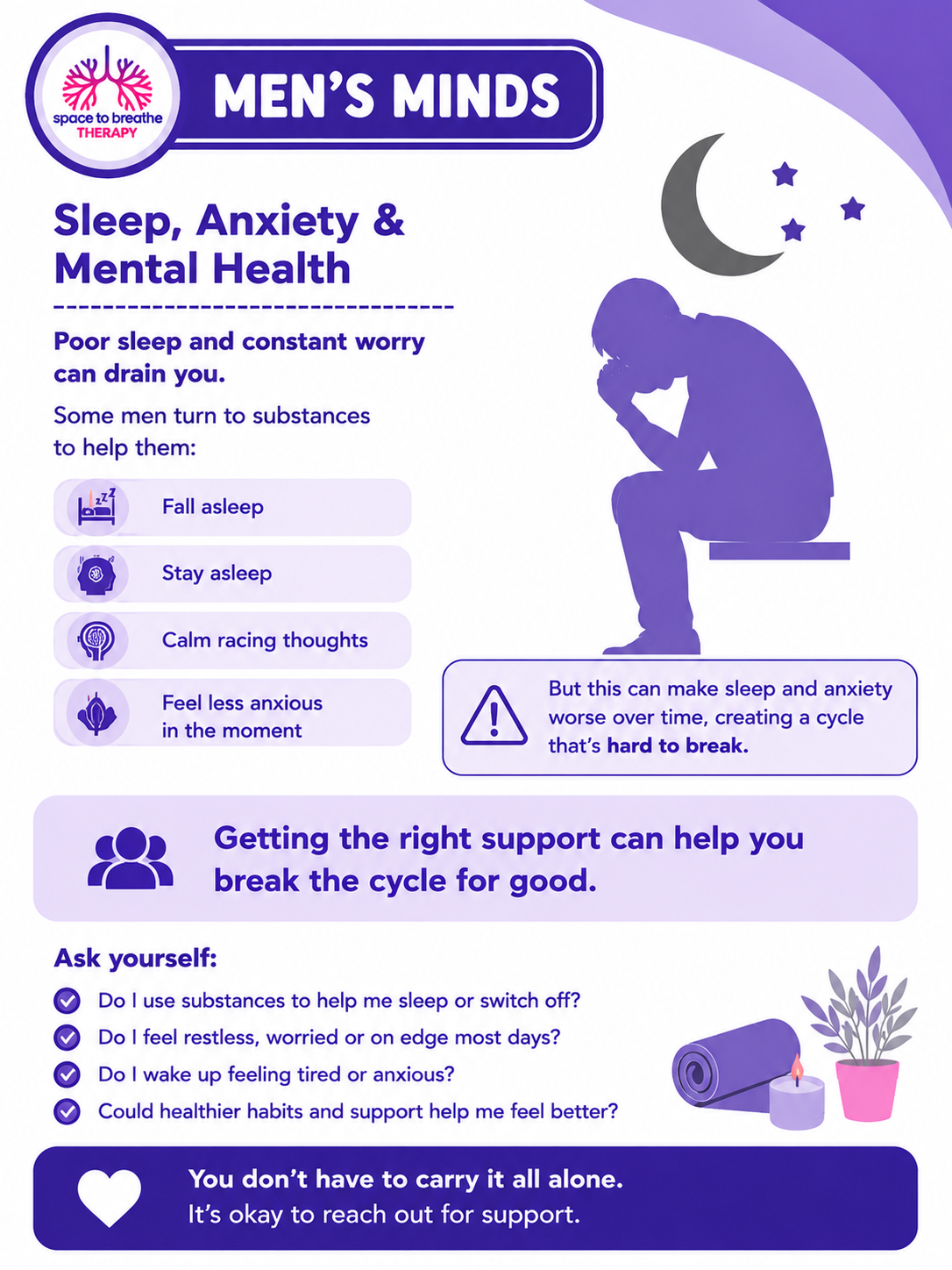
Men’s Minds: Sleep, Anxiety & Mental Health
When Your Body Is Tired but Your Mind Won’t Stop
There is a particular kind of exhaustion that comes from desperately wanting to sleep while your mind refuses to switch off.
You lie down tired, but suddenly you're thinking about work, money, family, something you said three days ago or everything you need to do tomorrow.
Your body wants rest.
Your brain is still on duty.
And when this happens night after night, it can begin affecting far more than your sleep.
The Sleep and Anxiety Cycle
Poor sleep can make anxiety harder to manage.
You wake exhausted, concentration becomes more difficult, patience gets shorter and everyday problems can feel much bigger.
Then you worry about sleeping again.
“What if I can't sleep tonight?”
That worry creates more tension, making sleep even harder.
Before long, you can find yourself trapped in a cycle of:
Worry → poor sleep → exhaustion → more anxiety → more worry.
Recognising the cycle is an important first step towards changing it.
When You Need Something to Switch Your Brain Off
Some men begin using alcohol or other substances because they feel like a quick way of relaxing or falling asleep.
It can feel as though you've finally found the off switch.
But alcohol can disrupt the quality and pattern of sleep, meaning you may wake during the night or feel tired the following day.
Then you may reach for the same coping strategy the next evening.
What started as a solution can gradually become part of the problem.
A Tip From Me – Empty Your Head Before Bed
If your mind becomes busiest the moment your head hits the pillow, try giving those thoughts somewhere else to go.
Keep a notebook nearby.
Write down:
What's worrying me?
What do I need to remember tomorrow?
What can wait?
What isn't mine to solve tonight?
You're not trying to solve everything.
You're simply telling your brain:
“I've recorded it. I can come back to this tomorrow.”
Give Your Brain a Landing Strip
Try not to expect yourself to go from 100 miles an hour straight into sleep.
Create a small transition.
Dim the lights.
Put work away.
Reduce stimulating screen use if it keeps you alert.
Have a shower.
Stretch.
Listen to something calming.
Read.
Breathe slowly.
Find a routine that signals:
“Nothing else is required from me today.”
It doesn't have to be perfect. Consistency can matter more than creating an elaborate bedtime routine.
Look at What Is Keeping You Awake
Sometimes sleep isn't actually the main problem.
Something else needs attention.
Are you worrying about money?
Struggling at work?
Feeling lonely?
Having relationship difficulties?
Carrying responsibilities you haven't spoken about?
Feeling anxious or low during the day?
If your mind is repeatedly bringing something to you at 2am, it may be worth giving it some attention during daylight hours.
A Message From Me
Please don't measure your strength by how long you can function while exhausted.
Sleep matters.
Your mental health matters.
And if you're struggling with either, you deserve support before you reach breaking point.
Talk to somebody.
Speak with your GP if sleep or anxiety is persistently affecting you.
And if alcohol or another substance has become the only way you feel able to relax or sleep, talk about that too.
You don't need to hide it or feel ashamed.
Sometimes the strongest thing you can do is recognise:
“What I'm doing isn't working anymore, and I need some help finding another way.”
Your mind needs rest just as much as your body does.
You don't have to solve tomorrow tonight.
Until next time, give yourself Space to Breathe.
With love, Maggie
Space to Breathe Therapy