





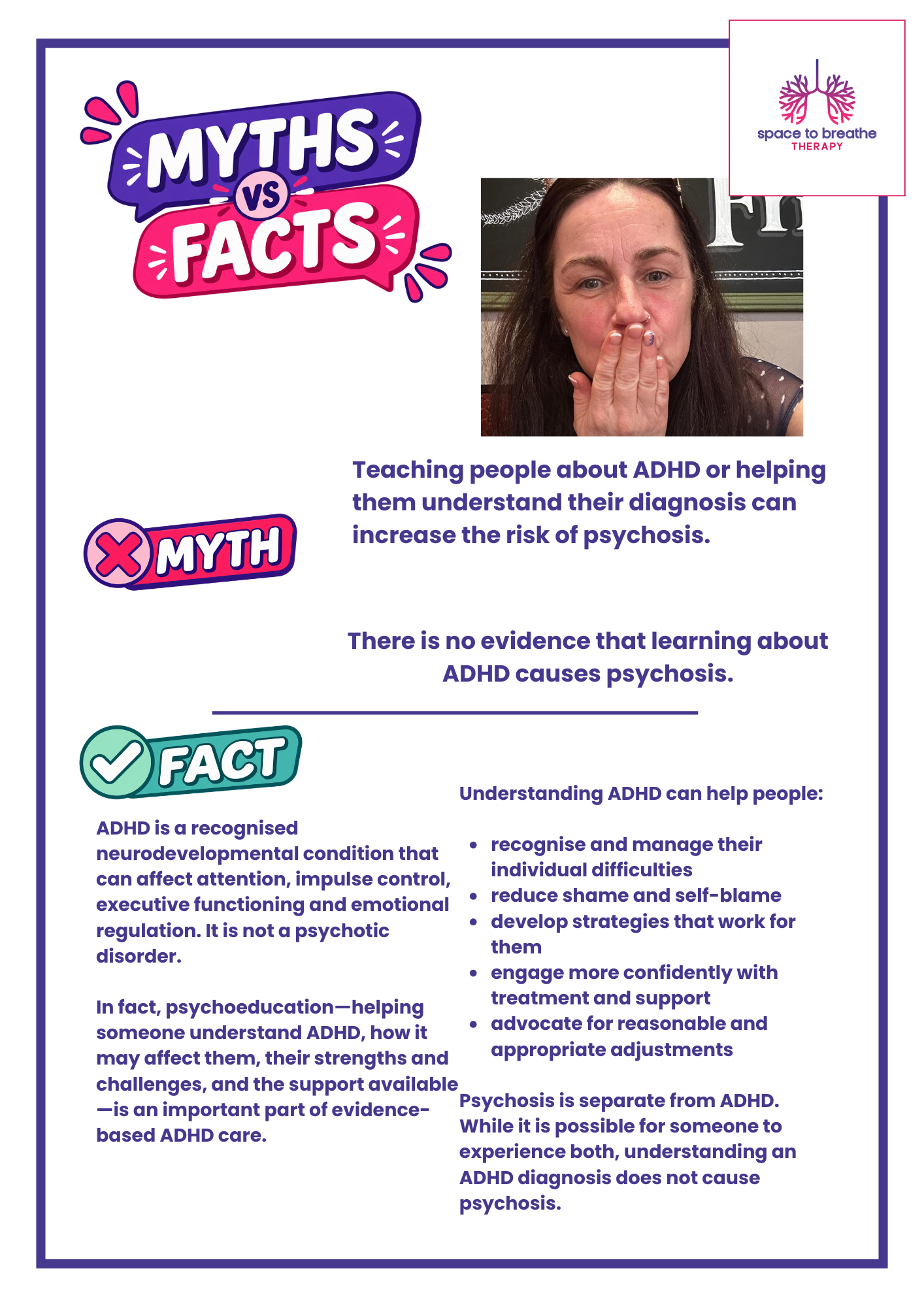
ADHD, Understanding and Psychosis: Separating Myth From Fact
There are many misconceptions surrounding ADHD, particularly around what happens when someone receives a diagnosis or begins learning more about their neurodivergence. One concerning myth is that teaching someone about ADHD, or helping them understand their diagnosis, could increase their risk of psychosis.
There is no evidence that simply learning about ADHD causes psychosis. Understanding a diagnosis is very different from developing a psychotic disorder.
ADHD Is a Neurodevelopmental Condition
ADHD is a recognised neurodevelopmental condition. It can affect areas including:
- attention and concentration
- impulse control
- working memory
- planning and organisation
- time awareness
- task initiation and completion
- emotional regulation
- motivation and executive functioning
People experience ADHD differently. For some, difficulties are noticeable from childhood. Others may reach adulthood before recognising that lifelong patterns of overwhelm, forgetfulness, impulsivity, emotional intensity or difficulty managing everyday demands could be connected to ADHD.
Receiving an explanation for these experiences can therefore be significant.
Learning About ADHD Is Called Psychoeducation
Helping someone understand their condition is often referred to as psychoeducation.
This can involve learning what ADHD is, how it may affect the individual, recognising personal strengths and difficulties, identifying triggers and developing practical ways of managing everyday life.
Good psychoeducation should not tell somebody:
“Everything you experience is because of ADHD.”
Instead, it helps the person become curious about themselves.
They might begin asking:
What makes concentration easier for me?
Why are transitions difficult?
What happens when I become overwhelmed?
Which environments help me function well?
What support or adjustments could reduce unnecessary barriers?
This knowledge can increase self-awareness rather than create illness.
Diagnosis Can Change the Way Someone Understands Their Past
Learning that you have ADHD can sometimes bring strong emotions.
There may be relief:
“There is finally an explanation for why certain things have always been difficult.”
But there can also be sadness, anger or grief.
Someone may look back at school, employment, relationships or previous mental-health difficulties and wonder how things might have been different if their needs had been understood earlier.
This process should not automatically be interpreted as someone becoming psychologically unwell.
For many people, it is part of making sense of their life through a new framework.
ADHD and Psychosis Are Not the Same Thing
ADHD is not a psychotic disorder.
Psychosis involves changes in how someone experiences or interprets reality and can include symptoms such as hallucinations, delusions or significantly disorganised thinking.
ADHD primarily relates to neurodevelopmental differences affecting areas such as attention, executive functioning and impulse regulation.
They are different conditions.
It is possible for a person to experience both ADHD and a psychotic disorder, just as someone with ADHD can experience anxiety, depression or other mental-health conditions. The presence of one condition does not mean that understanding or discussing ADHD has caused another.
Why Someone May Seem More Focused on ADHD After Diagnosis
After receiving a diagnosis, some people temporarily talk about ADHD a great deal.
They may notice ADHD-related behaviours everywhere.
They might say:
“I didn't realise I did that because of my ADHD.”
This can sometimes be misunderstood as somebody becoming overly focused on their diagnosis.
But there is another explanation.
They may simply be recognising patterns they previously had no language for.
Imagine discovering at 40 that difficulties you had experienced since childhood had an explanation. It would be understandable to spend time revisiting experiences and learning about the condition.
As understanding develops, ADHD often becomes integrated into the person's wider sense of identity rather than remaining the centre of every conversation.
Understanding Can Reduce Shame
Without an explanation, people may create their own explanations for their difficulties.
“I'm lazy.”
“I'm unreliable.”
“Why can everyone else manage this?”
“I should be able to do this.”
Repeated experiences of struggling with tasks that appear easy for other people can significantly affect confidence.
Understanding ADHD can replace some of these moral judgements with more useful questions.
Instead of:
“Why can't I just do it?”
the question might become:
“What is making this task difficult, and what would make it more accessible?”
That change can be powerful.
Understanding ADHD Can Support Practical Change
Psychoeducation should lead to practical support rather than simply giving someone a diagnostic label.
Understanding their individual ADHD may help a person recognise that they benefit from:
- written rather than purely verbal instructions
- visual reminders
- breaking large tasks into smaller steps
- body doubling
- predictable routines
- movement breaks
- reduced distractions
- additional processing time
- clearer deadlines
- support with organisation
- workplace or educational adjustments
The aim is not to make everything about ADHD.
The aim is to understand what helps this particular person function well.
We Should Still Take Changes in Mental Health Seriously
Separating ADHD from psychosis does not mean ignoring significant changes in someone's mental health.
If someone begins experiencing hallucinations, strongly held beliefs that appear disconnected from reality, severe confusion, dramatic behavioural changes or other concerning symptoms, these deserve appropriate professional assessment.
They should not simply be assumed to be ADHD.
Equally, professionals should avoid assuming that someone's interest in understanding their ADHD represents psychological deterioration.
Both situations require curiosity rather than assumptions.
Knowledge Should Empower, Not Frighten
A diagnosis should not become something a person is frightened to learn about.
People deserve accessible, balanced information about their own minds.
Understanding ADHD can help someone recognise difficulties, identify strengths, communicate their needs, seek appropriate support and develop strategies that fit the way they function.
Perhaps one of the most important messages is:
Learning about yourself does not create your condition. It gives you language for experiences that may already have been there for many years.
Understanding should create opportunities for compassion, autonomy and appropriate support—not additional stigma.
Space to Breathe