





Column Note-Taking Worksheet - Organising information, improving clarity and developing practical note-taking habits
Taking notes can be an effective way to organise information, remember important details and make everyday workplace communication easier to manage.
However, traditional note-taking methods do not always suit everyone’s needs. Long paragraphs, unstructured information and rapidly delivered instructions can make it difficult to identify what matters most or remember what needs to happen next.
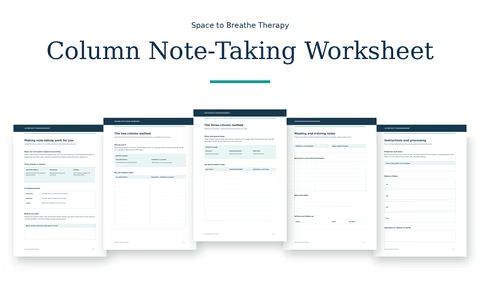
This six-page guide and collection of reusable worksheets introduces practical column-based note-taking methods that can be adapted to different tasks, working environments and individual preferences.
The resource focuses on making information easier to organise, review and act upon, without expecting everyone to process or record information in the same way.
What you’ll find inside
Making note-taking work for you
Discover how structured notes can support organisation, understanding and information processing.
Consider different approaches to recording information and identify what makes notes useful and accessible for your individual needs.
The two-column method
Learn how to divide information into two clearly defined sections.
A practical example demonstrates how this approach can separate key information from questions, reminders or actions.
A reusable worksheet provides space to practise the method.
The three-column method
Develop a more detailed approach by organising information into three categories.
This can help distinguish important points, supporting details and practical next steps, making information easier to review later.
Meeting and training notes
Use a structured worksheet to capture discussion points, decisions, responsibilities and follow-up actions.
The layout helps organise information during meetings, training sessions and workplace conversations.
Instructions and information processing
Break longer instructions into manageable steps, identify priorities and record questions that may need clarification.
This section can be particularly useful when working with detailed information or tasks involving several stages.
Creating your personal note-taking system
Reflect on the methods that work best for you and consider how to adapt them to different situations.
A final worksheet helps you develop a flexible approach that supports your preferred way of working.
Who is this resource for?
These worksheets may be particularly helpful for people who find unstructured information difficult to organise, experience challenges with working memory or information processing, or simply prefer a clearer approach to recording important details.
They may also be useful for neurodivergent individuals, employees attending regular meetings, people completing workplace training and anyone looking to develop more manageable organisational habits.
The worksheets can be printed and reused or used as a starting point for creating your own digital note-taking templates.
There is no single correct way to take notes. The aim is to help you discover practical methods that make information easier to understand, remember and use in ways that suit you.
Maggie,
Space to Breathe Therapy




