





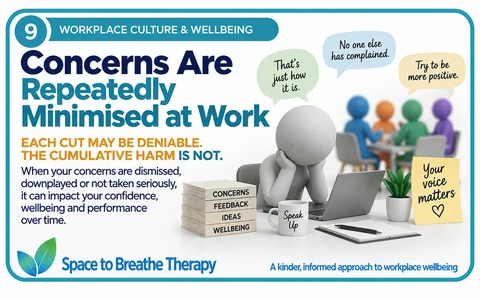
Concerns are repeatedly minimised
Each Cut May Be Deniable. The Cumulative Harm Is Not.
What happens when you speak up at work, but the concern keeps being reduced, explained away or treated as an isolated incident?
“You’re overthinking it.”
“That’s just how it is.”
“No one else has complained.”
“Try to be more positive.”
“I’m sure they didn’t mean it like that.”
Any one response may have an innocent explanation. The difficulty is when the same pattern happens repeatedly and the underlying concern is never properly examined.
This full Space to Breathe Therapy workplace resource looks beyond one conversation and helps members recognise the cumulative impact of repeatedly not being heard.
INSIDE THE FULL GUIDE
• what repeated minimisation can look and sound like
• the difference between disagreement and dismissal
• why reassurance can sometimes replace meaningful investigation
• concerns being repeatedly treated as isolated incidents
• being told that nobody else has complained
• being encouraged to be more positive, resilient or flexible
• what happens when promised follow-up never arrives
• self-doubt and questioning your own interpretation
• why people may eventually stop speaking up
• hypervigilance, anxiety and loss of trust
• the effect on confidence, wellbeing and work
• why repeated minimisation may be particularly difficult for neurodivergent employees
• psychological safety and why speaking-up cultures matter
• how to look for a pattern rather than only the latest incident
• a detailed workplace concern-recording table
• how to document facts, responses and follow-up
• questions that help separate evidence from assumptions
• how to raise the concern again with greater clarity
• a Concern - Pattern - Impact - Request conversation framework
• what meaningful workplace follow-up can look like
• reasonable adjustments and disability-related concerns
• options when internal conversations are not resolving the issue
• a full personal reflection worksheet
• a dedicated section for managers and HR
• examples of less dismissive ways to respond
• a tailored message from Space to Breathe Therapy
• UK workplace support and reference sources
WHEN PEOPLE STOP SPEAKING UP
Repeated minimisation can have an effect far beyond the original incident.
A person may begin by questioning the workplace situation. After enough dismissive responses, they can start questioning themselves.
They may become quieter in meetings, stop reporting smaller concerns, over-document everything because they feel they will not be believed, or become anxious before conversations with managers.
That silence should not automatically be interpreted as the problem having disappeared.
This resource encourages members to look at the whole pattern: what was raised, what response followed, what action was promised, what actually changed and whether similar incidents continued.
It includes a practical recording table so members can see cumulative patterns rather than relying on memory while under stress.
RAISING THE CONCERN AGAIN
The guide gives members language that is clear without requiring them to accuse another person of deliberately causing harm.
For example:
“I have raised several incidents involving the same issue. Each has been discussed separately, but I don’t think the repeated pattern has been considered. I am becoming reluctant to speak up because I don’t know what action follows when I raise something. Could we review the incidents together, agree what will be investigated, who owns the action and when I will receive an update?”
There is also a full section for managers and HR, because receiving a concern well does not mean automatically agreeing with every interpretation.
It means listening, recording, investigating proportionately, looking for patterns, explaining decisions and closing the loop.
This resource is part of the “Each Cut May Be Deniable. The Cumulative Harm Is Not.” workplace collection and is designed to help people notice the pattern, listen, record and act without jumping to conclusions about motive.
Space to Breathe Therapy
A kinder, informed approach to workplace wellbeing




