





Disability In The Work Place - Understanding accessibility, recognising barriers and finding practical support
Disability can affect people’s experiences of work in different ways, and workplace environments, expectations and practices can play an important role in making everyday tasks more or less accessible.
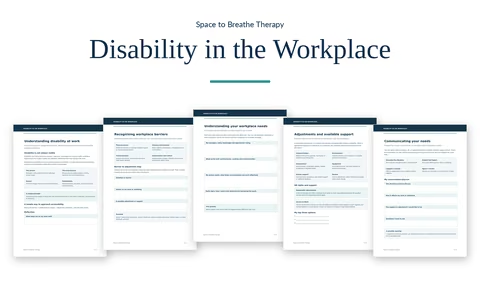
This six-page guide and collection of practical worksheets provides an opportunity to better understand workplace accessibility, recognise individual needs and consider adjustments that may help create a more supportive working environment.
The resource takes a strengths-based approach, recognising that accessibility is not simply about an individual’s abilities or challenges, but also about how workplaces are organised, designed and managed.
What you’ll find inside
Understanding disability at work
Learn about visible and non-visible disabilities, the importance of accessibility and how workplace environments can create or reduce barriers.
Recognising workplace barriers
Identify situations that may affect comfort, communication, concentration or participation. A guided worksheet helps you consider how these barriers affect your working experience and what changes might help.
Understanding your workplace needs
Reflect on your strengths, preferred working conditions and individual access needs. Consider what helps you work effectively and recognise situations where additional support may be beneficial.
Adjustments and available support
Discover examples of workplace adjustments, including changes to communication, equipment, working arrangements and physical environments. The guide also introduces reasonable adjustments under the Equality Act 2010 and the UK Access to Work scheme.
Communicating your needs
Prepare for conversations with managers, HR or other appropriate people about workplace accessibility. Structured prompts help you identify what you would like to discuss and what support you may wish to request.
Creating your accessibility plan
Bring your reflections together into a practical plan that identifies priorities, possible adjustments and manageable next steps.
Who is this resource for?
This guide may be helpful for disabled employees, people exploring their accessibility needs, individuals preparing for workplace conversations and anyone wanting to better understand how working environments can become more inclusive.
There is no single approach to workplace accessibility that works for everyone. The worksheets encourage you to consider your own circumstances, preferences and priorities without pressure to follow a particular path.
The aim is to support greater understanding, confidence and practical planning while recognising that creating accessible workplaces is a shared responsibility.
Maggie,
Space to Breathe Therapy




