





Explaining Your Needs Without Oversharing - A practical workplace worksheet for communicating support needs, maintaining privacy and setting personal boundaries
Explaining your needs at work can sometimes feel uncomfortable, particularly when conversations involve disability, health conditions or personal circumstances.
You may want to request support or discuss a workplace barrier without sharing every detail of your diagnosis, medical history or personal experiences.
Finding the right words can also be challenging when you’re unsure what information is relevant or how much you’re expected to explain.
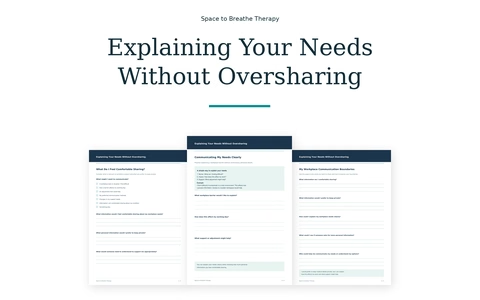
This three-page PDF worksheet provides a gentle, structured approach to communicating workplace needs while considering your personal boundaries.
Through practical tick-box activities, guided reflection questions and example wording, you can identify what feels comfortable to share, explain how workplace barriers affect you and consider adjustments that might help.
The focus is on communicating relevant information clearly, without feeling pressured to disclose more than is necessary.
What’s included?
1. What Do I Feel Comfortable Sharing?
Begin by considering which aspects of your workplace needs you would feel comfortable discussing.
A tick-box activity helps you identify information you may wish to communicate, such as workplace difficulties, their impact, possible adjustments and preferred communication methods.
Guided reflection questions provide space to consider:
- What information you feel comfortable sharing.
- Which personal details you would prefer to keep private.
- What someone may need to understand to support you appropriately.
This page encourages you to recognise your own boundaries before entering conversations about workplace support.
2. Communicating My Needs Clearly
Practise explaining workplace needs using a simple three-step structure.
The barrier: What am I finding difficult?
The impact: How does this affect my work?
The support: What adjustment might help?
A practical example demonstrates how to explain a workplace difficulty and suggest an adjustment without providing detailed personal or medical information.
Three guided reflection questions then provide writing space to prepare your own explanation.
This page may be particularly useful when preparing for a meeting, writing an email or discussing reasonable adjustments.
3. My Workplace Communication Boundaries
Bring your reflections together into a personalised communication boundaries plan.
The final worksheet includes five questions to help you consider:
- What information you’re comfortable sharing.
- Which details you would prefer to keep private.
- How you could explain your workplace needs clearly.
- What you might say if someone asks for more personal information than you’re comfortable providing.
- Who could help you communicate your needs or understand your options.
A practical example of boundary-setting language provides a starting point for conversations where you would prefer to focus on workplace difficulties and adjustments rather than personal medical details.
You can revisit this page whenever your circumstances, support needs or communication preferences change.
Who is this worksheet for?
This worksheet may be particularly helpful for disabled and neurodivergent employees, people managing long-term health conditions and anyone who finds discussing personal circumstances at work difficult.
It may also support people who:
- Feel anxious about disclosing health information.
- Are preparing to request workplace adjustments.
- Prefer to organise their thoughts before conversations.
- Want to communicate their needs without sharing unnecessary details.
- Find it difficult to establish or maintain personal boundaries.
- Are preparing for discussions with managers, HR or occupational health services.
The worksheet can be completed independently or used alongside appropriate workplace support.
A supportive reminder
You can communicate workplace needs without automatically sharing every detail of your personal circumstances.
Focusing on the barriers you experience, how they affect your work and what adjustments might help can provide a useful starting point.
However, some circumstances may require relevant information to help an employer understand a disability-related need or assess appropriate adjustments. Occupational health professionals may also request information as part of an assessment.
The aim is not to avoid all disclosure, but to help you make informed choices about what is relevant, necessary and comfortable to communicate.
Where the relevant legal requirements apply, employers may have a duty to make reasonable adjustments for disabled employees under the Equality Act 2010.
Your personal boundaries matter. You deserve to have your workplace needs considered respectfully, without feeling pressured to share unnecessary details about your private life.
This worksheet provides general information and reflective guidance. It does not replace individual occupational health or legal advice.
Maggie,
Space to Breathe Therapy




