





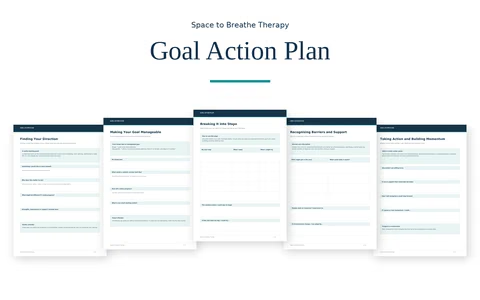
Goal Action Plan - Turning meaningful goals into manageable steps
Setting goals can provide direction, motivation and a sense of purpose, but knowing where to begin or how to maintain progress isn’t always straightforward.
Sometimes a goal can feel too large, circumstances can change or everyday responsibilities can make it difficult to find the time and energy to move forward.
The Goal Action Plan is a six-page guide and practical workbook designed to help you identify meaningful goals, break them into manageable actions and develop a flexible approach to making progress.
Rather than focusing on rigid deadlines or constant productivity, this resource encourages realistic planning, self-awareness and compassionate reflection.
Whether you’re working towards a personal goal, developing a new habit or making changes in your professional life, the worksheets provide a structured way to organise your thoughts and identify practical next steps.
What you’ll find inside
1. Finding Your Direction
Begin by considering what you would like to achieve and why it matters to you.
Reflect on your personal values, interests and priorities, recognising the difference between goals that feel meaningful and those influenced by external expectations.
The accompanying worksheet helps you identify a goal, understand your motivation and recognise existing strengths or resources that may support you.
2. Making Your Goal Manageable
Large or loosely defined goals can sometimes feel overwhelming.
This section introduces ways to turn broad intentions into clearer, more achievable outcomes.
Through guided reflection, you’ll identify what you want to work towards, consider what feels realistic and develop a manageable starting point.
The emphasis is on creating a goal that suits your circumstances rather than following an unnecessarily rigid approach.
3. Breaking It Into Steps
Once you’ve identified your goal, the next stage is to consider how you might begin working towards it.
A structured action-planning worksheet helps you divide your goal into smaller steps, identify what you may need and consider flexible timeframes.
You’ll also have an opportunity to identify the smallest action you could take to get started.
This approach can make larger goals feel more approachable while providing a clearer sense of direction.
4. Recognising Barriers and Support
Progress doesn’t always happen as expected, and difficulties can arise for many reasons.
This section encourages you to identify potential barriers, consider helpful adjustments and recognise support or resources that may make your goal easier to work towards.
The worksheet also provides space to think about how you might adapt your plan when circumstances change.
Rather than viewing obstacles as failures, the focus is on understanding what may help you move forward.
5. Taking Action and Building Momentum
Beginning a goal is one step, but maintaining progress can involve different challenges.
Discover practical approaches to supporting motivation, using reminders, developing manageable routines and recognising smaller achievements.
The accompanying Momentum Plan helps you identify actions that feel achievable, consider what might help you begin and develop supportive responses for times when progress slows.
This section also encourages you to recognise the importance of rest, flexibility and realistic expectations.
6. Reviewing Progress and Adjusting Your Plan
The final worksheet provides an opportunity to reflect on your experiences and recognise what you’ve learned.
Consider what has worked well, what has felt difficult and whether your original plan still meets your needs.
You’ll be encouraged to acknowledge achievements, identify helpful changes and decide on your next manageable step.
The resource also recognises that pausing, adapting or letting go of a goal can sometimes be a positive and appropriate decision.
Who is this resource for?
The Goal Action Plan workbook may be helpful for:
- Individuals working towards personal or professional goals.
- People who find larger tasks or long-term plans overwhelming.
- Anyone looking to develop more realistic and manageable routines.
- Neurodivergent individuals who benefit from structured planning and flexible approaches.
- People experiencing changes in motivation, energy or circumstances.
- Individuals using coaching, therapy or self-reflection to support personal development.
The worksheets can be completed at your own pace and revisited whenever you need to review or adjust your plans.
You don’t need to have everything figured out before beginning, and there is no expectation to make progress at the same pace every day.
A flexible approach to progress
Meaningful progress doesn’t always involve large achievements or constant forward movement.
Sometimes it means taking a small step, recognising something you’ve learned, asking for support or adjusting your expectations to better suit your circumstances.
The aim of this workbook is to help you create a practical, personalised action plan that supports your goals while respecting your individual needs, priorities and capacity.
Maggie,
Space to Breathe Therapy




