





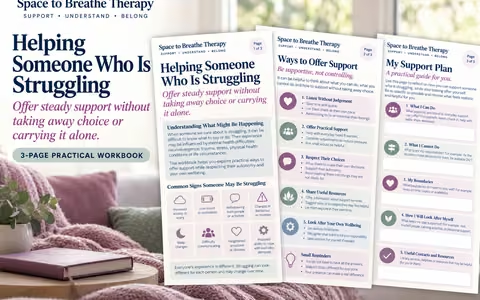
Helping Someone Who Is Struggling
Offer Steady Support Without Taking Away Choice or Carrying It Alone
When somebody we care about is struggling, it can be difficult to know what to say, what to do or how much help to offer.
We may worry about saying the wrong thing, feel responsible for making everything better or become so focused on supporting another person that we overlook our own wellbeing.
Sometimes, despite our best intentions, we may offer solutions before somebody is ready, take over responsibilities they would prefer to manage themselves or feel guilty when we cannot do more.
Helping Someone Who Is Struggling is a compassionate, practical three-page workbook from Space to Breathe Therapy, designed to help you provide meaningful support while respecting the other person's independence, preferences and boundaries.
The workbook explores how to recognise distress, communicate sensitively, offer practical assistance and understand the difference between supporting somebody and feeling responsible for fixing everything.
What's Inside
- Understanding When Someone Is Struggling: Recognise possible changes in mood, behaviour, communication, energy, motivation and everyday functioning.
- Listening Without Judgement: Explore how to create space for somebody to talk without rushing, interrupting or immediately offering solutions.
- Offering Practical Support: Discover ways to help with everyday demands, appointments, routines or difficult situations without taking control.
- Respecting Personal Choices: Understand the importance of consent, independence, dignity and allowing somebody to make their own decisions wherever possible.
- Supporting Neurodivergent Individuals: Consider sensory needs, communication preferences, processing time, shutdown and different ways of expressing distress.
- Sharing Useful Resources: Explore how to offer information about professional services, support networks and practical tools without applying pressure.
- Understanding Your Limits: Recognise what you can realistically offer and when additional or specialist support may be needed.
- Healthy Boundaries: Learn why caring for somebody does not mean being available constantly or carrying every responsibility.
- Looking After Yourself: Explore rest, emotional support, personal limits and recognising when supporting another person is affecting your own wellbeing.
- Your Personal Support Plan: Complete five guided reflection exercises to identify what you can offer, what is outside your responsibility and how to provide sustainable support.
Supporting Without Taking Over
Meaningful support is not always about finding answers or making problems disappear.
Sometimes the most helpful thing we can offer is patience, consistency, a listening ear or practical assistance with something that feels overwhelming.
The workbook encourages you to consider three important questions:
What can I do?
Identify realistic ways to offer emotional, practical or everyday support.
What is not mine to carry?
Recognise the difference between being supportive and taking responsibility for another person's entire wellbeing or recovery.
How can I look after myself too?
Create boundaries that allow you to remain caring without becoming exhausted or overwhelmed.
Who Is This Workbook For?
This resource may be particularly helpful for:
- Family members, partners and friends supporting someone experiencing emotional distress.
- Parents and carers supporting young people or adults with mental health difficulties.
- People supporting autistic or ADHD individuals.
- Colleagues, managers and workplace peer supporters.
- Anyone who finds themselves taking responsibility for other people's emotions or wellbeing.
- Therapists, coaches and support workers using reflective resources alongside their professional work.
Caring Does Not Mean Carrying Everything
You do not need to have every answer, solve every problem or make yourself available at all times to be a supportive person.
Healthy support involves listening, understanding, practical help, appropriate boundaries and recognising when somebody may need additional assistance.
You can care deeply about someone without taking away their choices or carrying everything alone.
This three-page printable A4 workbook includes clear explanations, supportive strategies and five personal reflection exercises to help you create a realistic and compassionate support plan.
Space to Breathe Therapy
Support • Understand • Belong
A psychoeducational wellbeing resource designed to encourage compassionate communication, appropriate boundaries and sustainable support. It does not replace professional mental health assessment, treatment, safeguarding or emergency assistance.