





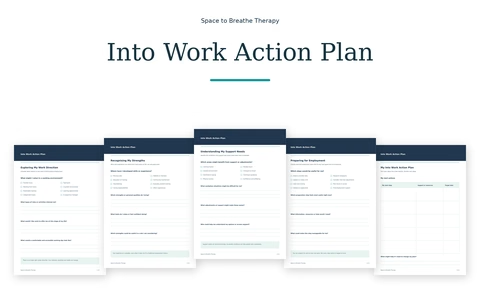
Into Work Action Plan - A practical workbook for exploring employment goals, recognising strengths and planning manageable steps towards work
Moving towards employment can involve many decisions, from identifying suitable opportunities to understanding your strengths, preparing applications and considering what support might help.
Whether you’re entering employment for the first time, returning after a break or thinking about changing direction, having a clear and flexible plan can make the process feel more manageable.
This six-page PDF workbook provides a structured approach to exploring your employment goals and identifying practical steps towards them.
Through guided reflections, tick-box activities and planning exercises, you’ll have opportunities to consider what matters to you, recognise your existing abilities and identify the support or adjustments that could help you move forward.
The workbook encourages realistic goals and individual choice, recognising that everyone’s circumstances, needs and employment journey are different.
What’s included?
Page 1: Exploring My Work Direction
Begin by considering what you would like from employment and which working environments might suit you.
Reflect on your interests, preferred activities and the aspects of work that feel meaningful or important.
A practical activity encourages you to consider preferences such as flexible hours, remote working, structured routines, teamwork and independent tasks.
You’ll also have space to identify employment areas you might like to investigate further.
Page 2: Recognising My Strengths
Identify the skills, qualities and experiences you already bring.
This section encourages you to recognise strengths developed through previous employment, education, volunteering, caring responsibilities, hobbies and everyday experiences.
Guided questions help you consider your transferable skills and how these might relate to different roles or working environments.
The focus is on recognising your abilities without overlooking the value of experiences gained outside traditional employment.
Page 3: Understanding My Support Needs
Consider what might help make employment more accessible, comfortable and sustainable.
This page provides opportunities to identify potential barriers and reflect on support needs relating to communication, accessibility, working arrangements, transport, confidence or training.
You’ll also be encouraged to think about practical adjustments and sources of support.
Recognising support needs is an important part of planning for work. The aim is to identify helpful conditions rather than expecting yourself to manage every difficulty without assistance.
Page 4: Preparing for Employment
Organise some of the practical tasks involved in preparing for work.
A checklist helps you consider activities such as:
- Exploring suitable job opportunities.
- Updating or preparing your CV.
- Identifying useful training or qualifications.
- Preparing job applications.
- Considering interview adjustments.
- Researching potential employers.
- Identifying employment support services.
Reflection questions help you decide which preparation steps are most relevant to your circumstances and where you might benefit from additional guidance.
Page 5: My Into Work Action Plan
Bring your ideas together into a practical action plan.
A structured planning table provides space to identify your next steps, consider the support or resources you might need and set realistic target dates.
Additional reflection encourages you to think about potential obstacles and ways to make your plans more manageable.
You can use this page to organise immediate priorities or develop a longer-term approach to employment.
Your plan can be adjusted as your circumstances or goals change.
Page 6: Reviewing My Progress
Take time to recognise what you’ve achieved and consider what you’ve learned along the way.
Guided reflection questions encourage you to think about:
- Progress you’ve made towards your goals.
- Strengths or preferences you’ve discovered.
- Challenges you’ve encountered.
- Changes in your employment interests or circumstances.
- Helpful next steps.
This page can be revisited regularly to help you review your progress and make adjustments without unnecessary pressure.
Who is this workbook for?
Into Work Action Plan may be helpful for anyone exploring employment opportunities or preparing for a change in their working life.
It may be particularly useful for:
- People entering employment for the first time.
- Individuals returning to work after a career break.
- Disabled and neurodivergent people considering workplace accessibility and support.
- People exploring a different career direction.
- Individuals rebuilding confidence around employment.
- Anyone who would benefit from breaking employment preparation into smaller, manageable steps.
The workbook can be completed independently or alongside a careers adviser, employment support worker, coach or another trusted professional.
A supportive reminder
There is no single correct pathway into employment.
Your goals, circumstances, energy levels and support needs may change over time, and it’s reasonable for your plans to change with them.
Progress doesn’t always mean completing every task or reaching a particular milestone by a fixed date. It can also involve gaining clarity, recognising your strengths, understanding your needs or deciding that a different direction would suit you better.
Your employment journey should reflect your individual needs, priorities and circumstances. Small, manageable steps can still represent meaningful progress.
This workbook provides general guidance and reflective activities. It does not replace personalised careers, employment or legal advice.
Maggie,
Space to Breathe Therapy




