




Job Demands–Resources Model

Explore how workplace demands and available resources influence stress, motivation and burnout. Discover the Job Demands–Resources Model through interactive activities, identify pressures and protective factors, and create practical adjustments that support healthier working conditions, improved wellbeing and sustainable performance.

Download
Job Demands–Resources Model | Space to Breathe Therapy
THE PSYCHOLOGY BEHIND STRESS & ANXIETY · RESOURCE 3

The Job Demands–Resources Model

Understand pressures · Explore resources · Find a better balance

Space to Breathe Therapy

1. How does the model work?

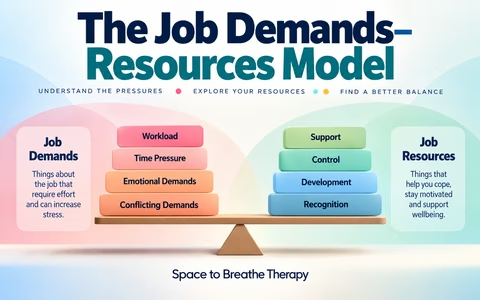
Developed by Demerouti and colleagues (2001), the Job Demands–Resources (JD-R) model describes how job demands can contribute to exhaustion and how job resources can support motivation and engagement. High demands are not always harmful, but sustained demands without adequate recovery or resources may increase burnout risk.

Job demands

Workload, time pressure, emotional labour, interruptions, conflicting expectations and sensory strain.

Job resources

Support, autonomy, role clarity, practical tools, accessible adjustments, recognition and recovery opportunities.

This is a reflection tool, not a diagnostic test. Your scores are personal impressions, not a clinical or validated JD-R assessment.

2. Explore your working conditions

Move each slider to reflect your current experience (0 = very low; 10 = very high).

Demands
Resources

3. Recognise the patterns

When demands remain high

Fatigue, reduced concentration, irritability, mistakes and difficulty switching off may become more noticeable. These are signals to review conditions, not evidence of personal failure.

When resources are strengthened

Clear priorities, supportive supervision, reasonable adjustments and more control over tasks can make demands more manageable and support engagement.

Why individuals may need different adjustments

Neurodivergence, chronic illness, disability, caring responsibilities and personal circumstances may affect which demands are costly and which resources help.

What organisations can change

Review staffing, workload, deadlines, accessibility, meeting expectations, communication, role clarity and the availability of genuine breaks. Responsibility should not rest solely with employees.

4. Build a practical action plan

Your reflections stay on this device unless you download them.

5. Questions to take away

Which demands can be reduced or redesigned? Which resources are missing? What would meaningful support look like in your actual working environment?

Reference: Demerouti, E., Bakker, A. B., Nachreiner, F., & Schaufeli, W. B. (2001). The job demands-resources model of burnout. Journal of Applied Psychology, 86(3), 499–512.

Space to Breathe Therapy · Educational information, not a diagnosis or replacement for professional support.



