





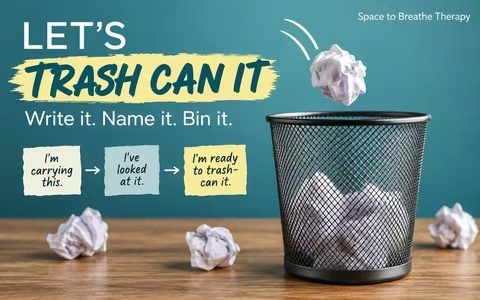
Let's Trash Can It
Write it. Name it. Bin it.
Some thoughts, criticisms, expectations and worries take up far more room than they deserve.
This activity lets you write them down, decide what needs genuine attention, and symbolically bin the punishment, replay or borrowed expectation you no longer want to keep carrying.
How This Works
Create a Trash Slip by writing down a thought. Before throwing it, decide whether it is something you would like to symbolically release or something that deserves to be kept for care.
The animated bin is a symbolic exercise. It does not delete memories or make difficult experiences disappear. It is a way of practising choice over what deserves your continued attention.
Create Your Trash Slip
Choose one repeated worry, harsh expectation, unhelpful criticism or thought you are tired of carrying.
A slip is not automatically ready to bin. You can decide whether to bin it or move it to Keep & Care.
My Slips
Before You Throw
Not every difficult thought is meaningless, and not every problem should be discarded. The aim is to separate the useful information from the criticism, self-punishment or repetition.
It May Be Ready to Bin
It May Need Keep & Care
Ready… Aim… Bin It!
Choose an item from your slips. When you are ready, select Bin It! and watch it drop into the bin.
You are not required to feel better afterwards. Sometimes symbolic actions feel relieving; sometimes they do not, and that is okay.
Choose What You Want to Bin
Only slips you have not already binned or moved to Keep & Care appear here.
The Big Bin Round
Sometimes one thought is only the beginning. These seven prompts help you notice repeated sources of pressure and decide what you would like to stop carrying.
Keep & Care
Not everything difficult is rubbish. Some experiences need to be heard, some needs deserve support, and some problems require practical action.
This page is separate from the bin because your pain, needs, rights and safety are not things to throw away.
My Keep & Care Slips
Before & After Reflection
The purpose is not to guarantee relief or positivity. It is to notice whether the activity helped you distinguish what needs attention from what you can put down.
A Personal Message from Maggie
Sometimes we continue carrying words, criticisms and expectations long after they have stopped helping us.
We can replay the same conversation, hold ourselves to impossible standards or take responsibility for things that were never ours to carry.
I created Let's Trash Can It as a playful way to pause and ask: what is actually worth keeping, and what am I continuing to punish myself with?
This isn't about dismissing what has happened or pretending something difficult doesn't matter. Some experiences need time, understanding and support. But the judgement and pressure we place on ourselves do not always deserve a permanent home.
You can keep what helps you grow, give care to what still hurts, and put down what no longer needs to follow you.
Maggie
Space to Breathe Therapy
Further Reading & Clinical Notes
Symbolic activities and reflective writing may help some people notice patterns, express emotion and practise psychological distance from unhelpful thoughts. The effects vary, and the exercise is not a clinically validated treatment.
This resource draws broadly on cognitive defusion, reflective writing, self-compassion and psychological flexibility. Letting go of unnecessary self-punishment is different from suppressing emotion, ignoring responsibilities or denying past harm.
Explore NHS mental health guidance, Mind, and NICE guidance for further information.




