





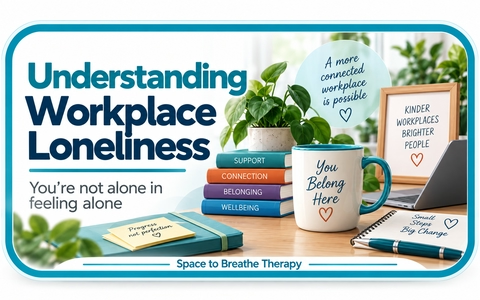
UNDERSTANDING WORKPLACE LONELINESS
You can be surrounded by people at work and still feel deeply alone.
Workplace loneliness is not simply about being physically by yourself. It can happen when you feel unseen, disconnected, left out of conversations, unsure where you belong, or as though you have to keep parts of yourself hidden just to get through the working day.
Sometimes it develops gradually. You may notice that you are speaking less, withdrawing from colleagues, losing confidence or feeling that everyone else seems to connect more easily than you do. Remote working, changing teams, workplace friendships shifting, difficult team dynamics, masking, neurodivergence, stress and a lack of psychological safety can all contribute.
If this feels familiar, try not to judge yourself for finding it difficult. Meaningful connection does not have to begin with a huge change. It might start with one safe person, one honest conversation, joining in for a few minutes when you feel able, asking for support, or simply recognising that your need for connection matters.
The aim is not to force yourself to become more social. It is to help you find ways of working and connecting that feel safe, genuine and manageable for you.
In the accompanying guide, I explore some of the signs of workplace loneliness, what may contribute to it, how it can affect wellbeing, and gentle ways to begin rebuilding a sense of connection and belonging.
You deserve to feel that there is a place for you at work.
Maggie
Space to Breathe Therapy
You can be surrounded by people at work and still feel deeply alone.
Workplace loneliness is not simply about being physically by yourself. It can happen when you feel unseen, disconnected, left out of conversations, unsure where you belong, or as though you have to keep parts of yourself hidden just to get through the working day.
Sometimes it develops gradually. You may notice that you are speaking less, withdrawing from colleagues, losing confidence or feeling that everyone else seems to connect more easily than you do. Remote working, changing teams, workplace friendships shifting, difficult team dynamics, masking, neurodivergence, stress and a lack of psychological safety can all contribute.
If this feels familiar, try not to judge yourself for finding it difficult. Meaningful connection does not have to begin with a huge change. It might start with one safe person, one honest conversation, joining in for a few minutes when you feel able, asking for support, or simply recognising that your need for connection matters.
The aim is not to force yourself to become more social. It is to help you find ways of working and connecting that feel safe, genuine and manageable for you.
In the accompanying guide, I explore some of the signs of workplace loneliness, what may contribute to it, how it can affect wellbeing, and gentle ways to begin rebuilding a sense of connection and belonging.
You deserve to feel that there is a place for you at work.
Maggie
Space to Breathe Therapy




