





Meetings can sometimes be one of the most demanding parts of a working day, because we are often expected to listen, process information, communicate, remember what has been said and make decisions — all at the same time.
For somebody with processing, sensory, communication, memory or concentration differences, that can create a significant workplace barrier.
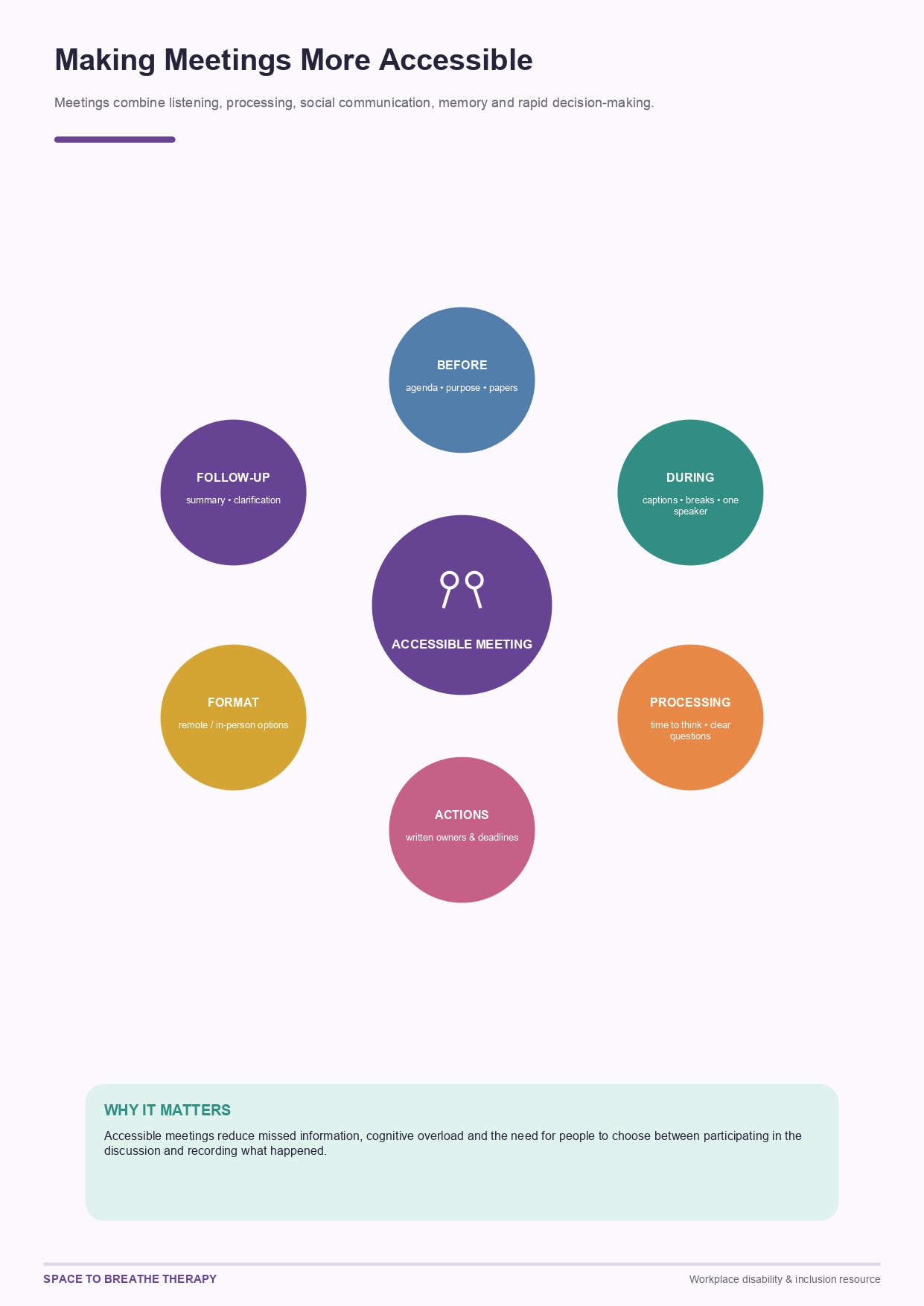
This resource shows that making meetings more accessible doesn't necessarily require complicated changes. Sending an agenda, purpose and papers beforehand can allow someone to prepare. During the meeting, captions, breaks, one person speaking at a time, clear questions and additional processing time can all help.
It can also be helpful to provide written actions and deadlines, offer remote or in-person options where appropriate, and follow up afterwards with a summary and an opportunity to clarify anything that wasn't fully understood.
Something I think is particularly important is that people shouldn't have to choose between participating in a conversation and trying desperately to record everything that is being said. Accessible meetings can reduce cognitive overload and the risk of important information being missed.
For me, a good meeting isn't simply one where everybody was invited.
It's one where everybody had a genuine opportunity to understand, contribute and leave knowing what happens next.
Sometimes a few thoughtful changes can make that possible.
Maggie
Space to Breathe Therapy




