





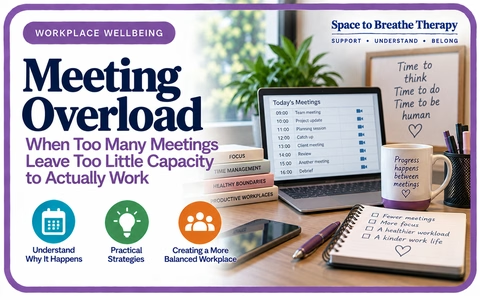
MEETING OVERLOAD
When Too Many Meetings Leave Too Little Capacity to Actually Work
Meetings are work — but they can also remove the time needed to complete everything else.
This Workplace Wellbeing resource explores what happens when calendars become so full that employees spend the day moving from meeting to meeting and then try to complete concentrated work around the edges.
The three-page downloadable guide looks at back-to-back meetings, transition time, cognitive fatigue, ADHD, autism, masking, sensory and social processing, online meeting fatigue and the hidden work that happens before and after each meeting.
It also asks an important question: does this actually need to be a meeting?
Practical ideas include shorter meetings, clearer agendas, questions in advance, breaks between meetings, protecting focus time, reducing unnecessary attendance and using written communication when discussion is not required.
The guide also asks managers to compare the diary with the workload. If most of somebody's working day has already been allocated to meetings, the remaining work cannot simply be expected to fit into time that no longer exists.
The space between meetings is not wasted time. It is often where thinking, processing and actual delivery happen.
Space to Breathe Therapy
Support • Understand • Belong




