





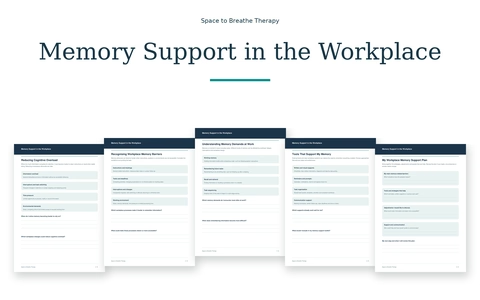
Memory Support in the Workplace - A practical workbook for memory, cognitive accessibility and workplace support
Memory difficulties can affect many aspects of working life, from remembering instructions and managing deadlines to following procedures, organising tasks and keeping track of information.
These experiences may be associated with neurodivergence, disability, health conditions, fatigue, stress or cognitive overload. They can also be made more difficult by workplace environments and expectations that place unnecessary demands on memory.
This eight-page PDF workbook combines accessible information, practical worksheets and guided reflection activities to help you understand workplace memory demands, recognise barriers and identify strategies and adjustments that support your individual needs.
What’s included?
1. Understanding Memory Demands at Work
Learn about different types of memory used throughout the working day, including working memory, prospective memory, recall and task sequencing. Reflect on which demands you encounter most frequently and when remembering information becomes more difficult.
2. Recognising Workplace Memory Barriers
Identify workplace situations that can create additional cognitive demands, such as multiple verbal instructions, frequent interruptions, unclear procedures, competing deadlines and distracting environments.
3. My Memory Barriers Worksheet
Use a structured worksheet to record memory-related difficulties across different workplace situations. Consider what makes each situation challenging and which changes or supports could help.
4. Tools That Support My Memory
Consider practical memory aids, including written instructions, checklists, visual guides, reminders, shared calendars and task management tools. Identify which strategies suit your needs and working environment.
5. Reducing Cognitive Overload
Understand how information overload, interruptions, time pressure and environmental demands can affect memory and concentration. Reflect on the conditions that make remembering information more difficult and consider changes that could reduce unnecessary cognitive demands.
6. Requesting Memory-Related Adjustments
Identify workplace barriers and consider reasonable adjustments that could improve accessibility. Prepare to explain how particular working practices affect you and which changes might provide meaningful support.
7. Preparing My Support Conversation
Use dedicated writing spaces to prepare for workplace discussions. Record who you could approach, questions you would like to ask, information you may need and your preferred ways of communicating.
8. My Workplace Memory Support Plan
Bring your reflections together into a personalised plan covering your main memory challenges, workplace barriers, helpful tools, possible adjustments and sources of support. Consider how you might review whether changes are working.
Who is this workbook for?
This workbook may be particularly helpful for disabled and neurodivergent employees who experience difficulties with working memory, remembering instructions, organising information or managing multiple tasks.
It may also support people experiencing cognitive fatigue, fluctuating health conditions, concentration difficulties or memory changes associated with stress and other health-related factors.
Managers, employers, occupational health professionals and workplace support practitioners may find the workbook useful when discussing cognitive accessibility and identifying practical workplace adjustments.
A supportive reminder
Experiencing memory difficulties does not mean someone lacks ability, motivation or commitment.
Workplace systems can either increase or reduce the demands placed on memory. Clear communication, accessible information and appropriate adjustments can make a meaningful difference.
Under the Equality Act 2010, employers may have a duty to make reasonable adjustments for disabled employees where the relevant legal requirements apply.
Memory support should not depend entirely on an individual finding ways to compensate for inaccessible workplace practices.
An accessible workplace recognises that people process, retain and recall information differently, and provides practical systems that support everyone to participate and contribute.
This workbook provides general information and reflective guidance. It does not replace individual medical, occupational health or legal advice.
Maggie,
Space to Breathe Therapy




