





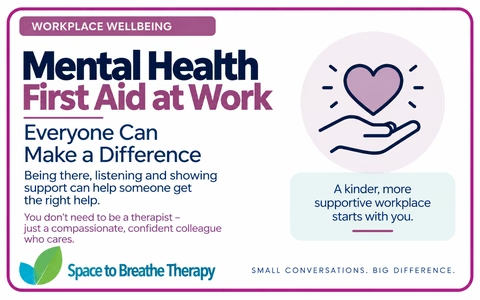
Mental Health First Aid at Work
Everyone can make a difference - a comprehensive workplace guide
This expanded Space to Breathe Therapy workplace resource is designed to be a substantial, practical guide rather than a short leaflet.
This comprehensive guide brings the core themes together: recognising that somebody may be struggling, starting a conversation, listening well, signposting, handling confidentiality, responding to risk, supporting adjustments, following up and addressing workplace factors that may be contributing to distress.
INSIDE THE FULL GUIDE
• what supportive mental-health first aid at work means in everyday practice
• recognising changes without diagnosing somebody
• examples of what you may notice at work
• what those signs can and cannot tell you
• language you can use to open a conversation
• how to listen without rushing into advice
• what to do when somebody says they are fine
• neurodivergent communication and accessible conversations
• workplace support, role boundaries and confidentiality
• practical workplace adjustments
• how supporters can protect their own wellbeing
• when work itself is part of the difficulty
• workload, control, support, relationships, role and organisational change
• questions for managers and organisations
• reasonable-adjustment considerations
• urgent and emergency situations
• follow-up after a significant conversation
• a practical workplace action tracker
• reflection prompts and workbook sections
• a full message from Space to Breathe Therapy
• UK support routes and further guidance
This version is deliberately fuller page-to-page. The purpose is to give members enough explanation, examples and practical wording to use the resource meaningfully rather than presenting a few short points surrounded by empty space.
A core message throughout the resource is that you do not need to fix another human being. Helpful support is about noticing, listening, respecting boundaries, making practical workplace changes where possible and helping somebody reach the right professional support when needed.
The guide also makes clear that wellbeing cannot sit entirely with the individual. If workload, conflict, unclear roles, exclusion, poor boundaries or organisational change are contributing to distress, a supportive workplace needs to address those conditions as well.
This is an educational Space to Breathe Therapy resource. It is not an accredited Mental Health First Aid England course or qualification and does not replace professional, emergency, safeguarding, occupational-health, HR or legal advice.
Space to Breathe Therapy
Support. Listen. Guide. Empower.