





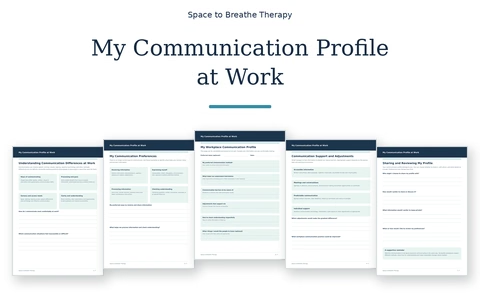
My Communication Profile at Work - A practical workbook for understanding communication preferences, accessibility and workplace support
Everyone communicates differently. Some people prefer written information, while others find spoken explanations, visual guidance or practical demonstrations more helpful.
Communication preferences can also be influenced by sensory environments, hearing differences, speech and language needs, information processing, cognitive fatigue and individual working styles.
When workplace communication methods do not accommodate these differences, everyday interactions can become unnecessarily difficult.
This seven-page PDF workbook combines accessible information, practical worksheets and guided reflections to help you understand your communication preferences, recognise potential barriers and identify adjustments that could support more comfortable and effective communication at work.
The workbook also includes a personalised communication profile that can be completed and shared independently.
What’s included?
1. Understanding Communication Differences at Work
Develop a greater understanding of different communication methods and preferences.
Consider how people receive, process and express information, alongside the influence of sensory environments, processing time and workplace expectations.
Reflect on which communication situations feel comfortable and where additional support may be helpful.
2. My Communication Preferences
Identify how you prefer to receive and share information.
Consider spoken explanations, written instructions, visual guidance, demonstrations and alternative communication methods.
Use practical activities to recognise which approaches support your understanding and help you communicate confidently.
3. Recognising Communication Barriers
Reflect on workplace situations that may create communication difficulties.
These might include meetings, unclear instructions, background noise, unexpected conversations or inaccessible digital communication.
Identify the barriers you experience and consider practical changes that could make these situations more accessible.
4. Communication Support and Adjustments
Consider adjustments that may improve communication accessibility.
Examples include written summaries, clearer instructions, additional processing time, visual information, quieter environments and alternative ways to contribute.
Identify which adjustments would make the greatest difference to your working day.
5. Communicating My Needs and Preferences
Prepare to discuss your communication preferences with colleagues, managers or workplace support professionals.
Use a simple framework to describe what works well, identify barriers and suggest practical adjustments.
Consider how to communicate your needs in a way that feels comfortable and appropriate for you.
6. My Workplace Communication Profile
Bring together your preferences and support needs in a personalised communication profile.
Record your preferred communication methods, helpful approaches, challenging situations and adjustments that support you.
This page is designed to be completed and shared independently, allowing you to communicate relevant information without needing to share the entire workbook.
7. Sharing and Reviewing My Profile
Consider how you might use your completed communication profile.
Reflect on who you would feel comfortable sharing it with, which information you would prefer to keep private and how you would like your preferences communicated.
Recognise that communication needs can change over time and that your profile can be reviewed and updated when necessary.
Who is this workbook for?
This workbook may be particularly helpful for disabled and neurodivergent employees, including people with autism, ADHD, hearing differences, speech and language needs, sensory sensitivities or information processing difficulties.
However, a diagnosis is not required to benefit from understanding your communication preferences.
The workbook may also support:
- Employees who want to communicate their preferences more clearly.
- People preparing to request workplace communication adjustments.
- Managers and supervisors seeking to understand individual communication needs.
- HR professionals and workplace wellbeing practitioners.
- Anyone who experiences barriers to communication in their working environment.
A supportive reminder
Effective workplace communication does not require everyone to communicate in the same way.
Some people need additional processing time, others benefit from written information, and some communicate most comfortably through alternative methods.
These differences should not automatically be viewed as difficulties or shortcomings.
Creating an accessible workplace involves recognising individual preferences, reducing unnecessary barriers and allowing flexibility in how information is shared and understood.
Under the Equality Act 2010, employers may have a duty to make reasonable adjustments for disabled employees where the relevant legal requirements apply.
Your communication preferences are valid, and understanding what works for you can be an important step towards creating a more accessible and supportive working environment.
This workbook provides general information and reflective guidance. It does not replace individual occupational health or legal advice.
Maggie,
Space to Breathe Therapy




