





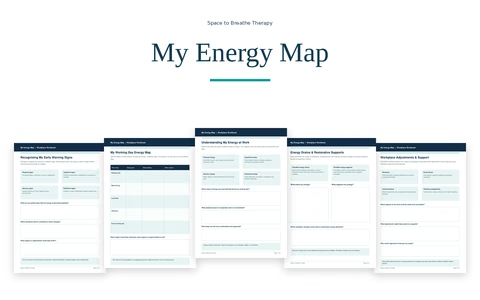
My Energy Map - A workplace energy and capacity workbook
Energy levels can change throughout the working day, particularly when managing disability, neurodivergence, chronic health conditions or demanding environments. Physical, cognitive, sensory and emotional demands can all affect how much energy we have available and how comfortably we can manage everyday responsibilities.
This six-page workbook provides practical guidance and reflective activities to help you understand your workplace energy patterns, recognise what drains or supports your capacity and identify adjustments that may make working more sustainable.
What’s included?
1. Understanding My Energy at Work
Learn about four different areas of energy: physical, cognitive, sensory and emotional. Reflect on how workplace activities, environments and expectations affect your capacity.
2. My Working Day Energy Map
Use a structured tracking worksheet to record your energy levels throughout the working day. Identify patterns, notice fluctuations and consider when additional support or reduced demands may be helpful.
3. Energy Drains & Restorative Supports
Recognise workplace situations that use significant energy, alongside environments, activities and adjustments that help preserve or restore your capacity. Reflect on changes that could reduce unnecessary demands.
4. Recognising My Early Warning Signs
Identify physical, cognitive, sensory and emotional signs that your energy may be becoming depleted. Consider what contributes to these changes and what support could help before difficulties increase.
5. Workplace Adjustments & Support
Consider practical changes to workload, communication, working arrangements and the workplace environment. Reflect on reasonable adjustments that could reduce barriers and support your wellbeing.
6. My Workplace Energy & Capacity Plan
Bring your reflections together into a personalised plan covering energy patterns, common drains, helpful supports, early warning signs, workplace adjustments and manageable next steps.
Who is this workbook for?
This workbook may be particularly helpful for disabled and neurodivergent employees, people living with chronic health conditions, and anyone whose energy or capacity fluctuates during the working day.
It can also support individuals who experience workplace fatigue, sensory overload, cognitive demands or difficulties balancing their energy across different responsibilities.
Managers and workplace support professionals may find the workbook helpful when discussing accessibility needs and sustainable working arrangements.
A supportive reminder
Managing energy is not simply about becoming more productive or finding ways to push through exhaustion.
Workplace expectations, accessibility, reasonable adjustments and opportunities for rest all influence how sustainable working arrangements can be.
Your energy needs may change from day to day, and you should not have to maintain the same level of capacity at all times to demonstrate your commitment or value.
Understanding your energy is about recognising your needs and creating conditions that support your wellbeing, not expecting yourself to do more with less.
This workbook provides general information and reflective guidance. It is not a substitute for individual medical or legal advice.
Maggie,
Space to Breathe Therapy




