





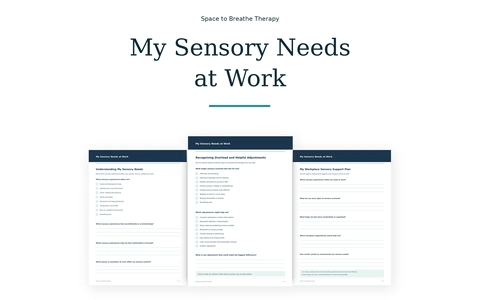
My Sensory Needs at Work - A practical workplace worksheet for understanding sensory experiences, recognising overload and identifying helpful adjustments
Everyone experiences sensory information differently. Sounds, lighting, textures, smells, movement and other aspects of the environment can influence how comfortable, focused or regulated someone feels throughout their working day.
For some people, particular sensory experiences may feel overwhelming, distracting or physically uncomfortable. Others may find certain sensations calming, enjoyable or helpful for concentration.
Sensory needs can also change depending on factors such as fatigue, stress, the environment and individual circumstances.
This three-page PDF worksheet provides a gentle, structured way to recognise your sensory experiences, identify potential difficulties and consider practical adjustments that could make your working environment more accessible.
Rather than expecting you to tolerate uncomfortable environments or change how you naturally experience sensory information, the worksheet focuses on understanding your needs and identifying what may help.
What’s included?
1. Understanding My Sensory Needs
Begin by identifying which sensory experiences affect you in your working environment.
A practical tick-box activity encourages you to consider areas such as:
- Sound and background noise.
- Lighting and visual distractions.
- Touch, clothing and textures.
- Smells and tastes.
- Movement and body positioning.
- Temperature and airflow.
- Busy or crowded environments.
Guided reflection questions provide space to consider which experiences feel uncomfortable or overwhelming, which sensations may help you feel comfortable or focused, and whether particular workplace environments affect your sensory wellbeing.
The aim is to recognise both sensory difficulties and experiences that may be supportive.
2. Recognising Overload and Helpful Adjustments
Consider how sensory overload may affect you and identify changes that could make your working environment more manageable.
A tick-box activity introduces possible signs of overload, including difficulty concentrating, increasing fatigue, physical discomfort, heightened sensitivity and changes in communication.
You’ll also have an opportunity to consider practical workplace adjustments, such as quieter spaces, adjustable lighting, movement breaks, flexible seating and reduced exposure to strong smells.
A short reflection question encourages you to identify one adjustment that could make a meaningful difference.
This section recognises that sensory overload is experienced differently by different people and that no single adjustment will suit everyone.
3. My Workplace Sensory Support Plan
Bring your reflections together into a personalised sensory support plan.
The final worksheet provides dedicated writing spaces to consider:
- Which sensory experiences affect you most at work.
- Your personal signs of sensory overload.
- What helps you feel more comfortable or regulated.
- Which workplace adjustments might support your needs.
- How you would prefer to communicate your sensory needs.
This page can be completed independently or used to help prepare for conversations about workplace accessibility and support.
It can also be revisited when your sensory needs or working environment change.
Who is this worksheet for?
This worksheet may be particularly helpful for autistic and other neurodivergent employees, disabled people and anyone who experiences sensory sensitivities or sensory overload in workplace environments.
It may also support people who find certain environments physically uncomfortable, distracting or exhausting, regardless of whether they have a formal diagnosis.
The worksheet may be useful for employees preparing to discuss workplace adjustments, as well as managers, occupational health professionals and workplace wellbeing practitioners who want to better understand individual sensory needs.
You do not need to experience every type of sensory difficulty to benefit from the activities.
A supportive reminder
Sensory needs are individual. An environment that feels comfortable to one person may be overwhelming or uncomfortable for another.
Sensory differences are not simply preferences that someone can always ignore or overcome through effort.
Recognising sensory needs can help identify environmental barriers and encourage more accessible ways of working.
Where the relevant legal requirements apply, employers may have a duty to make reasonable adjustments for disabled employees under the Equality Act 2010.
You do not need to justify your sensory experiences by comparing them with those of other people.
Your sensory needs are valid, even when others experience the same environment differently. Small changes can make a meaningful difference to comfort, wellbeing and accessibility.
This worksheet provides general information and reflective guidance. It does not replace individual medical, occupational health or legal advice.
Maggie,
Space to Breathe Therapy




