





My Workplace Barriers Check - Recognising workplace barriers, understanding their impact and identifying practical support
Workplace accessibility is about more than physical access to buildings. Communication methods, sensory environments, working arrangements, technology and organisational expectations can all influence how comfortably and effectively someone can participate in their working environment.
Sometimes barriers are immediately noticeable, while others become apparent gradually or only arise in particular situations.
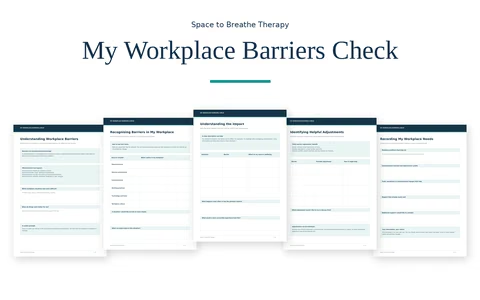
My Workplace Barriers Check is a six-page guide and collection of practical worksheets designed to help you recognise accessibility barriers, understand how they affect your working experience and identify adjustments that may help.
Rather than focusing on what an individual cannot do, this resource encourages you to consider how workplace environments and practices can be adapted to better support different needs.
The worksheets provide a structured way to document experiences, organise your thoughts and prepare for conversations about accessibility.
What you’ll find inside
1. Understanding Workplace Barriers
Begin by learning how workplace environments, systems and expectations can create barriers to accessibility.
This section introduces different types of barriers, including physical, sensory, communication, technological and organisational factors.
Practical examples demonstrate how everyday working conditions can influence comfort, participation and wellbeing.
2. Recognising Barriers in My Workplace
Use a structured checklist to identify situations that may be creating difficulties in your working environment.
Consider areas such as lighting, noise, communication, equipment, workload, working arrangements and workplace culture.
The worksheet encourages you to recognise which barriers are relevant to your own circumstances without assuming that everyone experiences the same challenges.
3. Understanding the Impact
Identifying a barrier is an important first step, but understanding its practical effects can make it easier to recognise what support may be needed.
This section helps you consider how particular situations affect your concentration, communication, comfort, participation or ability to complete everyday tasks.
A guided worksheet provides space to record examples and describe their impact.
4. Identifying Helpful Adjustments
Consider practical changes that may reduce or remove workplace barriers.
These might include adjustments to communication methods, equipment, physical environments, working arrangements or organisational practices.
The worksheet uses a simple approach to connect an identified barrier with a possible adjustment and the benefit it may provide.
The emphasis is on finding realistic solutions that respond to individual needs.
5. Recording My Workplace Needs
Develop a clearer understanding of the conditions and support that help you work comfortably and effectively.
Reflect on preferred working arrangements, communication approaches, environmental needs and adjustments that are already helpful.
This section also provides space to identify additional support you may wish to consider.
You do not need to disclose a diagnosis or detailed personal medical information to complete the activities.
6. My Workplace Barriers Action Plan
Bring your reflections together into a practical, personalised plan.
Identify the barriers you would most like to address, consider possible adjustments and decide which steps may be helpful.
The worksheet also encourages you to think about who you might approach for support and how you could communicate your needs.
This can provide a useful starting point for discussions with managers, HR departments or other appropriate workplace contacts.
Who is this resource for?
My Workplace Barriers Check may be particularly helpful for:
- Disabled employees who want to identify and document workplace accessibility barriers.
- Neurodivergent individuals exploring their environmental, communication or organisational needs.
- People experiencing difficulties with particular workplace practices or conditions.
- Employees preparing to request reasonable adjustments or discuss accessibility concerns.
- Individuals returning to work or adapting to changing circumstances.
- Anyone looking for a structured way to understand and communicate their workplace needs.
The worksheets can be completed at your own pace and revisited as your circumstances, responsibilities or working environment change.
You can focus on the sections that feel most relevant without needing to complete every activity.
Supporting accessible working environments
Workplace barriers are not always the result of an individual’s abilities or limitations. They can arise when environments, systems and expectations do not accommodate different ways of working.
Recognising these barriers can help create opportunities for meaningful adjustments, clearer communication and more inclusive working practices.
The aim of this workbook is to help you understand your workplace experiences, identify practical support and develop a clearer approach to communicating your accessibility needs.
Creating an accessible workplace is a shared responsibility, and individuals should not be expected to manage or overcome barriers entirely on their own.
Maggie,
Space to Breathe Therapy




