





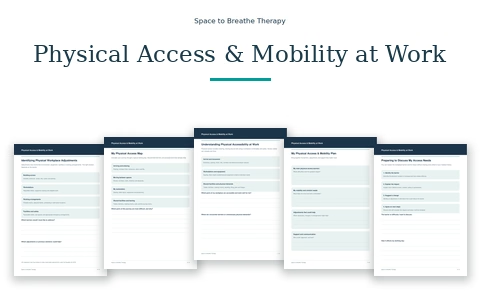
Physical Access & Mobility at Work - A practical workplace accessibility and mobility workbook
Physical accessibility involves more than being able to enter a workplace. It also includes moving between spaces, accessing facilities, using equipment comfortably and completing work without unnecessary physical barriers.
For disabled employees and people experiencing mobility difficulties, chronic pain, fatigue or fluctuating physical needs, workplace environments and expectations can create additional challenges.
This eight-page PDF workbook combines practical guidance, structured worksheets and reflective activities to help you recognise physical accessibility barriers, identify appropriate adjustments and prepare conversations about workplace support.
What’s included?
1. Understanding Physical Accessibility at Work
Consider different aspects of workplace accessibility, including entrances, movement, workstations, equipment, shared facilities and physical demands. Reflect on which parts of your workplace are accessible and where unnecessary barriers or physical strain may occur.
2. My Physical Access Map
Follow your journey through a typical working day, from arriving and entering the workplace to moving between spaces, accessing your workstation and using shared facilities. Identify what works well and where improvements may be needed.
3. Pain, Fatigue & Changing Mobility Needs
Reflect on how workplace activities, physical demands and environmental conditions may affect pain, fatigue and mobility. Consider how your needs might fluctuate and which changes could reduce unnecessary strain or support recovery.
4. Identifying Physical Workplace Adjustments
Learn about possible adjustments involving building access, workstations, equipment, working arrangements and shared facilities. Identify which barriers you would most like to address and consider practical changes that could improve accessibility.
5. Preparing to Discuss My Access Needs
Use a simple communication framework to identify workplace barriers, explain their impact, suggest adjustments and agree on next steps. Consider how to discuss your needs without feeling obliged to share every detail of your medical history.
6. My Accessibility Conversation Notes
Prepare for workplace discussions using dedicated writing spaces to record the adjustments you would like to request, people you could approach, questions you want to ask and your preferred communication methods.
7. My Physical Access & Mobility Plan
Bring together your main accessibility barriers, mobility and comfort needs, possible adjustments and sources of workplace support. Create a personalised plan that reflects your individual circumstances.
8. Next Steps & Reviewing Accessibility
Identify manageable next steps, consider who may be involved and plan how to follow up on accessibility requests. Reflect on whether adjustments are working and what further support may be needed if barriers remain or circumstances change.
Who is this workbook for?
This workbook may be particularly helpful for disabled employees, people with mobility-related access needs and individuals experiencing chronic pain, fatigue or fluctuating physical conditions.
It may also support employees whose physical accessibility needs are not immediately visible or whose working environment creates unnecessary physical demands.
Managers, employers and workplace support professionals may find the workbook useful when discussing accessibility needs and identifying practical improvements.
A supportive reminder
Physical accessibility is not simply about whether someone can enter a building.
It also involves being able to move, work, access facilities and participate without unnecessary discomfort, physical strain or exclusion.
Under the Equality Act 2010, employers may have a legal duty to make reasonable adjustments for disabled employees where the relevant requirements apply.
Recognising physical barriers and identifying possible adjustments can support more accessible working conditions, but responsibility for workplace accessibility should not fall solely on the person experiencing those barriers.
An accessible workplace recognises that physical needs vary and creates working conditions that support comfort, safety, dignity and meaningful participation.
This workbook provides general information and reflective guidance. It does not replace individual medical, occupational health or legal advice.
Maggie,
Space to Breathe Therapy




