





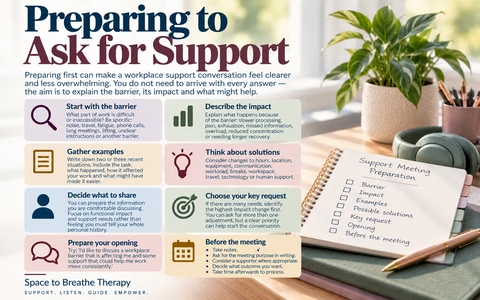
Preparing to Ask for Support
Building Confidence, Understanding Workplace Barriers and Preparing for a Support Conversation
Asking for support at work can sometimes feel daunting, particularly when you are unsure how to explain your difficulties, what information to share or which adjustments might help.
You may know that certain tasks, environments or expectations are creating barriers but find it difficult to put those experiences into words.
For autistic and ADHD individuals, disabled employees and people managing long-term or fluctuating health conditions, preparing for these conversations can be especially important.
Preparing to Ask for Support is a practical one-page workplace guide from Space to Breathe Therapy, designed to help employees organise their thoughts, identify their needs and approach workplace support discussions with greater clarity.
The guide encourages you to focus on the workplace barrier, how it affects you and the practical changes that may help, rather than feeling pressured to explain every detail of your diagnosis or personal history.
What's Inside
- Identifying Workplace Barriers: Recognise difficulties involving noise, travel, fatigue, meetings, communication, physical demands or task switching.
- Explaining the Impact: Explore how workplace barriers affect concentration, processing, energy, pain, performance or recovery.
- Gathering Practical Examples: Prepare two or three real situations that demonstrate the difficulties you experience and what may have helped.
- Considering Possible Solutions: Explore adjustments to working hours, equipment, technology, communication, workload, breaks or working environments.
- Deciding What to Share: Consider which personal information is relevant and what you feel comfortable discussing.
- Choosing Your Key Request: Identify the adjustment that could make the greatest difference while recognising that more than one change may be needed.
- Preparing Your Opening Words: Use a supportive conversation starter to explain why you are requesting a meeting.
- Getting Ready for the Meeting: Prepare notes, request information in advance, consider appropriate support and allow time afterwards to process the discussion.
Focus on What Happens at Work
You do not need to arrive at a workplace support meeting with every answer.
It can be helpful to begin by identifying one specific barrier.
For example, you might explain that frequent interruptions make it difficult to maintain concentration, that long meetings increase fatigue or that verbal-only instructions are difficult to retain.
Describing what happens during your working day can help your manager understand the impact and consider practical solutions.
Preparing Examples and Possible Adjustments
Real examples can make workplace discussions clearer.
You might record what task you were completing, what difficulty occurred, how it affected your work and what could have made the situation more accessible.
Potential support may include written instructions, quieter working arrangements, flexible breaks, assistive technology, adjusted schedules or human support.
The aim is to find changes that address the barriers you experience rather than expecting you to continually compensate for them.
Choosing What You Feel Comfortable Sharing
Discussing disability or health-related difficulties can feel personal.
You can prepare which information you want to discuss and focus on relevant workplace impacts and support needs.
Where information about a disability or health condition is necessary to consider an adjustment, the discussion should still respect your privacy and handle sensitive information appropriately.
Making Your Request
If you have several support needs, identifying one high-impact adjustment may help you begin the conversation.
The guide includes practical wording you can adapt:
"I'd like to discuss a workplace barrier that is affecting me and some support that could help me work more consistently."
You can also request the meeting purpose in writing, prepare notes, ask about having a supporter present where appropriate and take time to reflect before agreeing to proposed arrangements.
Who Is This Guide For?
This resource may be particularly helpful for:
- Disabled employees preparing to request workplace adjustments.
- Autistic and ADHD individuals navigating workplace communication and accessibility.
- People experiencing fatigue, pain, sensory overload or fluctuating health conditions.
- Employees returning to work following illness or absence.
- Individuals who find formal workplace conversations overwhelming.
- Therapists, coaches and support workers helping clients prepare for employment-related discussions.
- Managers seeking to understand how to make adjustment conversations more accessible.
Your Support Needs Deserve to Be Taken Seriously
Preparing for a conversation does not mean you have to prove your worth, justify every difficulty or arrive with a perfect solution.
A constructive discussion should provide opportunities to explain barriers, consider possible adjustments and agree practical next steps.
The purpose of asking for support is to make work more accessible and sustainable, not to change who you are.
This downloadable one-page PDF guide offers clear preparation steps, realistic workplace examples and helpful wording to support conversations about disability, reasonable adjustments and individual support needs.
Space to Breathe Therapy
Support. Listen. Guide. Empower.
An educational workplace resource supporting disability inclusion, neurodiversity, accessible communication and reasonable adjustments. It does not replace individual employment, occupational health, medical or legal advice.




