





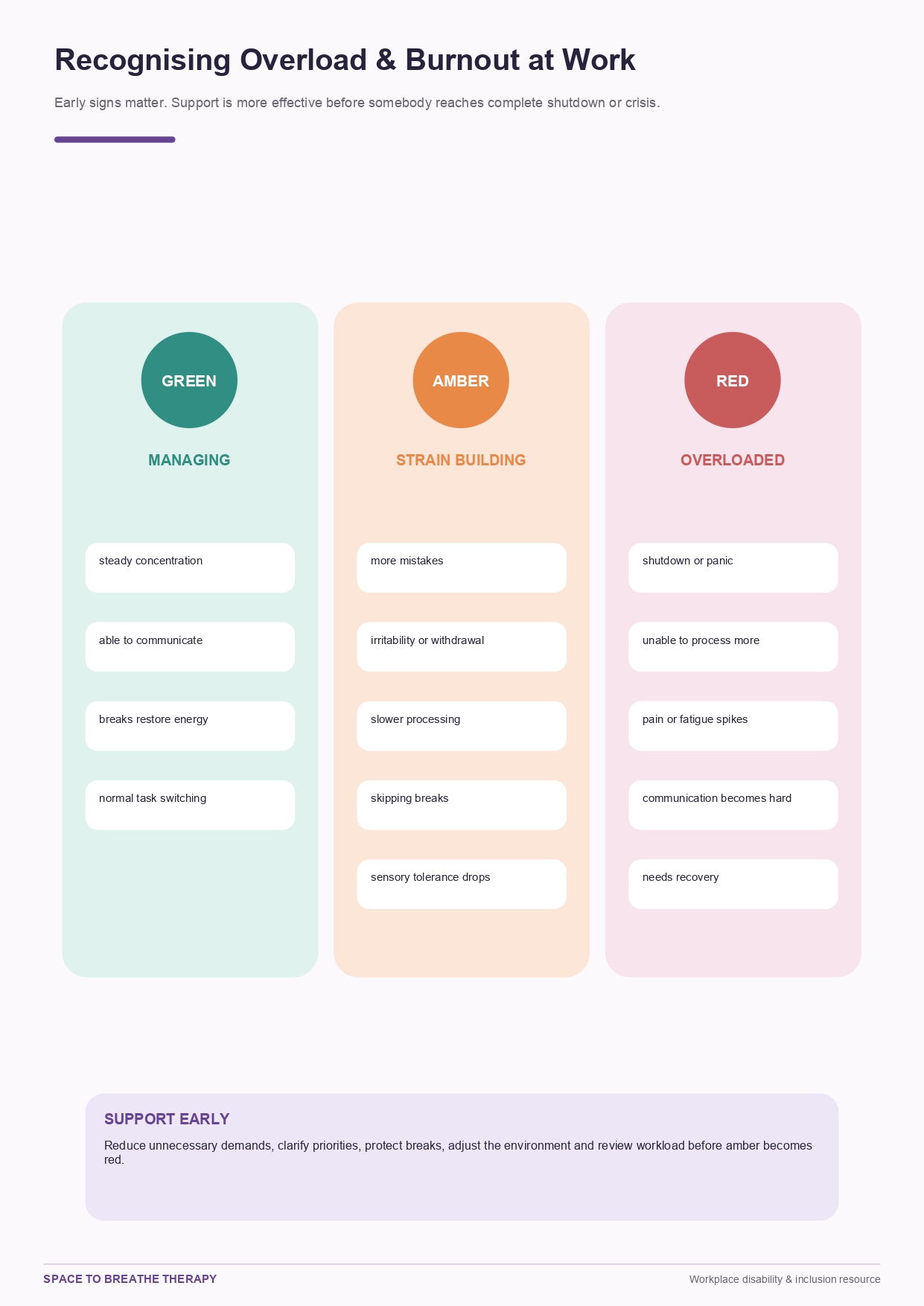
Burnout doesn’t usually happen all at once. Often there are small signs that somebody is beginning to struggle long before they reach the point where they simply cannot keep going.
This resource uses a really helpful green, amber and red approach to recognising overload at work. In the green stage, someone may be concentrating steadily, communicating and finding that breaks restore their energy. As strain begins to build, we might see more mistakes, slower processing, irritability or withdrawal, skipped breaks and reduced sensory tolerance.
By the time someone reaches red, they may be experiencing shutdown, panic, significant fatigue or pain, difficulty communicating or simply feel unable to process anything more. At this point, recovery becomes essential.
For me, the important question is:
Why wait until somebody reaches red before we offer support?
If we notice the amber signs, that is an opportunity to have a conversation. Priorities can be clarified, unnecessary demands reduced, breaks protected, workloads reviewed and environments adjusted.
This isn’t about lowering expectations or assuming somebody is incapable. It is about recognising when the way somebody is working has become unsustainable and responding before they reach crisis point.
Sometimes the most effective workplace adjustment is simply noticing sooner.
Maggie
Space to Breathe Therapy




