


Regular Breaks at Work

Discover why regular workplace breaks matter for concentration, energy, emotional wellbeing and sustainable performance. Explore mental fatigue, physical comfort, neurodivergent needs, workplace adjustments and UK rest-break entitlements through accessible facts, practical suggestions and interactive activities supporting healthier working routines.
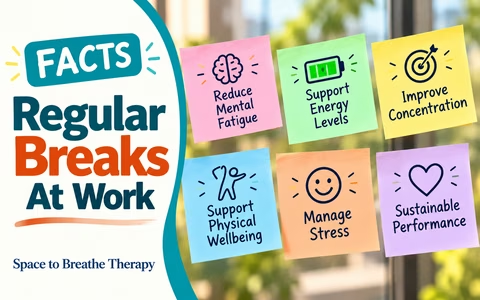

FACTS — Regular Breaks at Work | Space to Breathe Therapy
FACTS • WORKPLACE WELLBEING

Regular Breaks at Work

“Regular breaks can support concentration, energy and performance.”

Working continuously for long periods can increase mental and physical fatigue. A short pause can help people manage attention, cognitive demands and physical comfort before returning to work.

Space to Breathe Therapy

Why might breaks be important?

🧠

Concentration

A pause can help some people regain focus after sustained mental effort or repetitive tasks.

🔋

Mental fatigue

Stepping away can provide recovery time between demanding decisions and complex activities.

🌤️

Emotional regulation

Short pauses may help someone notice tension and manage the demands of a busy workplace.

🚶

Physical comfort

Changing position, moving or resting the eyes can ease discomfort associated with prolonged work.

🌈

Neurodivergent needs

Some ADHD and autistic employees benefit from sensory recovery or flexible pauses; needs differ individually.

🎯

Sustainable work

Breaks can help maintain energy and support effective work over the course of a demanding day.

What can employers do?

Make entitled breaks genuinely possible. Review workloads, provide suitable rest spaces, avoid unnecessary back-to-back meetings and discuss accessible arrangements. Some people benefit from scheduled breaks; others need flexibility to avoid interrupting a period of concentration.

UK fact: Most adult workers working more than six hours a day are entitled to one uninterrupted 20-minute rest break, subject to applicable exceptions. This is a minimum entitlement, not necessarily the ideal amount of rest for every individual. See GOV.UK rest breaks and Acas guidance.

Try a quick knowledge check

1. A break can be useful because it…
2. What is a helpful approach to neurodivergent break needs?
3. What is the usual minimum uninterrupted rest break for most adult workers on a shift longer than six hours?

Your workplace reflection

Your reflection remains in this page until you choose to download it. It is not sent to a server by this resource.

A message from Space to Breathe Therapy

Taking a break is not a sign of poor motivation or commitment. Different people have different energy patterns, concentration needs and physical requirements. Appropriate opportunities to rest are part of building a healthier, more inclusive workplace.

Rest is not the opposite of productivity. It can be part of maintaining it.

Educational information only; not a substitute for occupational-health, clinical, HR or legal advice.

Space to Breathe Therapy • Supporting healthier working environments




