





Requesting Workplace Support in Writing - A practical worksheet for preparing, communicating and following up workplace support requests
Requesting support at work can sometimes feel difficult, particularly when you need time to organise your thoughts, explain workplace barriers or consider which adjustments might help.
Communicating in writing can offer an alternative to an immediate conversation. It allows you to choose your words carefully, communicate information at your own pace and keep a record of what has been requested or agreed.
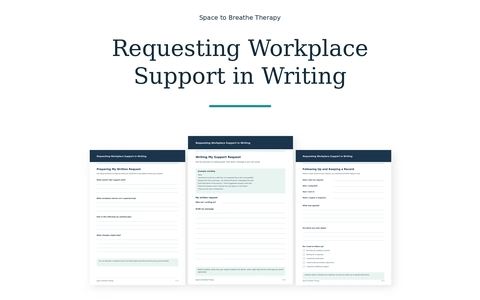
This three-page PDF worksheet provides a simple, structured approach to preparing a written workplace support request.
Through guided questions, a practical email example and dedicated writing spaces, you can identify the difficulties you’re experiencing, consider possible adjustments and prepare a message that reflects your individual needs.
The worksheet also includes a follow-up section to help you record responses and keep track of any agreed actions.
What’s included?
1. Preparing My Written Request
Begin by identifying what you would like support with and which workplace barriers may be affecting your working day.
Use guided reflection questions to consider:
- What you would like help with.
- The workplace barrier you’re experiencing.
- How the situation affects your work.
- Changes or adjustments that might help.
This page provides space to organise your thoughts before preparing a written request.
2. Writing My Support Request
Use a simple example email to help structure your message.
The example demonstrates how to introduce your request, explain a workplace barrier, suggest a possible adjustment and ask about next steps.
A dedicated writing area allows you to prepare your own email or letter using language that feels comfortable and appropriate for your circumstances.
You can adapt the example, use your own wording or complete the page independently as a draft.
3. Following Up and Keeping a Record
Keep track of your workplace support request and any responses you receive.
Record when you sent your request, who you contacted and how you communicated.
Additional writing spaces allow you to note any adjustments or actions agreed and identify whether further communication is needed.
A short tick-box activity helps you consider whether you’re waiting for a response, need clarification or would like to discuss additional support.
This page can be revisited whenever you need to review progress or follow up on your request.
Who is this worksheet for?
This worksheet may be particularly helpful for disabled and neurodivergent employees who prefer written communication or need support requesting workplace adjustments.
It may also benefit people who experience communication difficulties, anxiety, cognitive fatigue or challenges organising their thoughts during conversations.
The worksheet is suitable for anyone who would like a clearer structure for requesting workplace support in writing.
It may also be useful when preparing for conversations with managers, HR professionals or occupational health services.
A supportive reminder
You do not need to explain every detail of your personal circumstances to begin a conversation about workplace support.
Describing the barriers you’re experiencing, explaining their impact and identifying what might help can provide a useful starting point.
You also do not need to have every solution worked out before making a request.
Where the relevant legal requirements apply, employers may have a duty to make reasonable adjustments for disabled employees under the Equality Act 2010.
Keeping copies of written requests, responses and agreed actions can help you follow conversations and understand what happens next.
A written request does not have to be perfect. Its purpose is to help communicate your needs and begin a constructive conversation about support.
This worksheet provides general information and reflective guidance. It does not replace individual occupational health or legal advice.
Maggie,
Space to Breathe Therapy




