





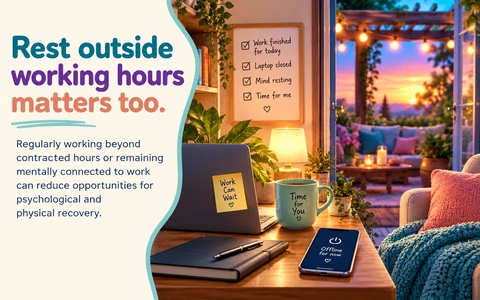
Rest Outside Working Hours Matters Too
Workplace wellbeing does not end when the working day finishes. Regularly working beyond contracted hours, checking emails during evenings or remaining mentally connected to workplace responsibilities can reduce opportunities for essential psychological and physical recovery.
This resource explores why rest matters, how constant availability and excessive working hours can affect emotional wellbeing, sleep, concentration and personal relationships, and why switching off is not always as straightforward as closing a laptop.
The accompanying downloadable PDF provides a comprehensive guide to recognising the signs of overworking, understanding the hidden pressures that make it difficult to disconnect, and developing healthier boundaries between professional and personal life.
It also considers the responsibilities of employers and managers in creating supportive workplace cultures, managing workloads realistically and respecting employees' time outside work.
Alongside practical strategies for protecting recovery time, the guide includes a simple five-minute end-of-day routine, personal reflection questions and guidance on recognising when additional support may be beneficial.
Designed for employees, managers, employers and anyone struggling to find a sustainable work-life balance, this resource encourages a compassionate approach to rest, boundaries and long-term wellbeing.
Rest is not a reward for completing everything. It is an essential part of staying well.
Practical Benefits of the Downloadable PDF
The Rest Outside Working Hours Matters Too PDF provides practical guidance to help individuals recognise how working beyond contracted hours and remaining mentally connected to work can affect their emotional, psychological and physical wellbeing.
Rather than simply explaining why rest matters, the guide offers realistic strategies that readers can begin using in their everyday lives.
Through the downloadable resource, readers can:
- Recognise early signs of overworking, including emotional exhaustion, disrupted sleep, difficulty concentrating and feeling unable to switch off.
- Develop healthier work-life boundaries by learning ways to manage communication, unfinished tasks and expectations outside working hours.
- Use a five-minute end-of-day routine to help mentally close the working day, organise outstanding responsibilities and transition into personal time.
- Explore personal working patterns through reflection questions that encourage greater awareness of stress, recovery needs and areas for change.
- Understand workplace responsibilities, including how employers and managers can support reasonable workloads, healthy boundaries and recovery time.
- Identify when additional support may be needed, with guidance on recognising persistent difficulties and seeking appropriate workplace or professional assistance.
The PDF can be downloaded, saved and revisited whenever needed, making it a useful resource for individual reflection, workplace wellbeing conversations, staff support and management discussions.
The aim is to help people make small, achievable changes that protect their personal time, support recovery and create a healthier, more sustainable relationship with work.
Space to Breathe Therapy – Supporting wellbeing during working hours and beyond.




