





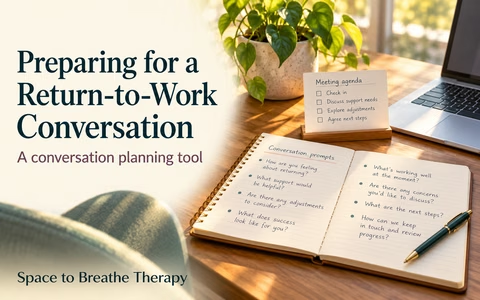
Talking About Your Return to Work
Prepare for a conversation in a way that suits you. Gather the points you want to explain, choose what you want to discuss, and make a draft message or meeting plan you can edit.
There is no score, deadline or right order. Skip anything that does not feel relevant.
Prepare in the way that works for you.
You may want to write a few notes before a meeting, prepare a message, or simply explore what questions you have. You can return to this tool and change your notes later.
This simply reflects which sections you have started. It is not a readiness score.
What would you like this conversation to do?
Start with the reason for talking. You can keep the answer simple.
Example ways to open the conversation
“I’d like to talk about planning my return and what a manageable start might look like.”
“Could we set aside some time to discuss the support and arrangements that may help me return?”
“I have a few questions about the next steps and would find it helpful to talk them through.”
Which topics would you like to raise?
Select the points that matter to you. You can add your own wording below.
What might help you communicate?
Think about the conversation format and any practical support that could make it easier.
Possible phrases for asking for support
“It would help me to have the main questions in writing.”
“Could I take a little time to think about that and come back to you?”
“I’d like to make a note of what we agree so I can refer to it later.”
Prepare your questions and wording
Choose a prompt to add it to your questions, or write your own.
Plan for after the conversation
Make space to note what was agreed and what you may want to follow up.
Build your draft
Make a starting point, then edit the wording until it sounds like you. Nothing is sent from this page.




