





STRESS AND PERFORMANCE
Finding your workable zone
We often hear that stress is bad for us, but our relationship with pressure is more complicated than that. Too little activation can leave us flat, distracted or unable to begin. A manageable amount may help us feel alert, motivated and engaged. When pressure becomes too intense, however, attention can narrow, memory can feel less reliable and even familiar tasks may become difficult.
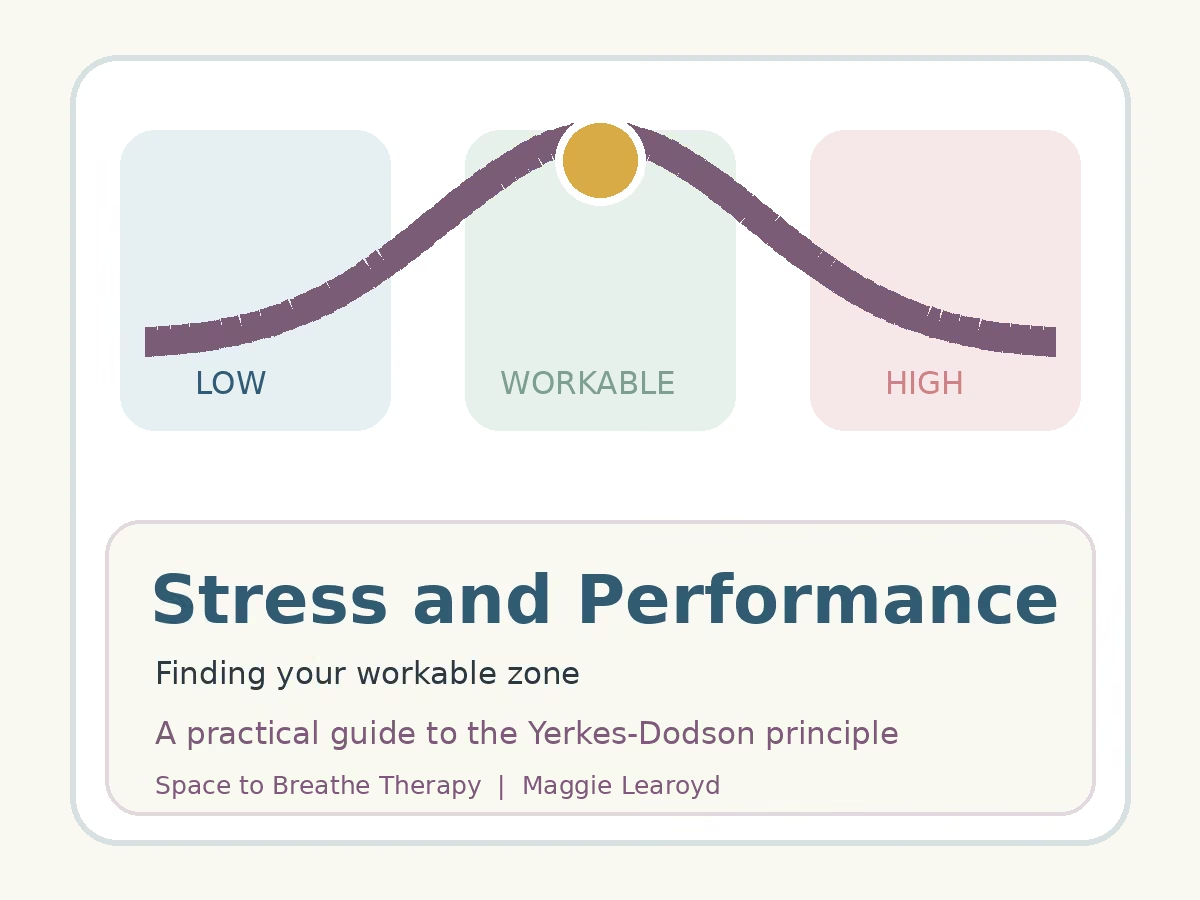
The Yerkes-Dodson principle is often illustrated with an inverted-U curve. It offers a simple way to think about how performance may improve as activation rises, reach a workable zone and then fall when the demand becomes overwhelming. I have created this guide as a conversation tool rather than a rigid rule. There is no universal amount of stress that everybody needs, and the highest point on the curve is not the same for every person or every task.
Sleep, health, sensory load, neurodivergence, trauma, confidence, familiarity, task complexity, meaning and available support can all change what feels manageable. A straightforward and well-practised task may remain possible under considerable pressure, while a new or complicated task may need far more calm, preparation and space.
The first page explains the model and helps you recognise the difference between low activation, a workable level and overload. The second page invites you to apply the idea to one real situation. You can record the signs you notice in your body, thoughts and behaviour, then choose one small adjustment to experiment with. That might mean adding stimulation and structure when you feel under-activated, or reducing demands and sensory pressure when everything feels too much.
I hope this resource helps you move away from judging yourself as lazy, weak or incapable. Sometimes the problem is not your willingness. The conditions may be asking too little, too much or the wrong kind of effort from your nervous system. Understanding your own workable zone gives you something practical to respond to.
With warmth,
Maggie
Space to Breathe Therapy
Important note: This resource is educational and is not a diagnostic or clinical assessment. Persistent stress, anxiety, burnout or difficulty functioning deserves appropriate professional support.