





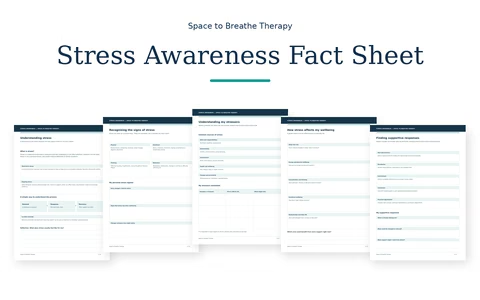
Stress Awareness Fact Sheet - Understanding stress and recognising your individual needs
Stress is a natural response to challenging situations, demands or pressures. While occasional stress can help us respond to immediate challenges, ongoing or excessive stress can affect our physical health, emotional wellbeing, concentration and everyday functioning.
Stress doesn’t look or feel the same for everyone. Some people notice physical changes such as headaches, muscle tension or fatigue, while others experience irritability, difficulty concentrating, disrupted sleep or a sense of being overwhelmed.
Recognising these experiences can help us better understand our individual needs and identify where additional support or adjustments may be helpful.
Stress Awareness Fact Sheet is a six-page educational guide and practical workbook designed to help you understand stress, recognise personal warning signs and develop a more supportive approach to managing everyday demands.
Through accessible information, structured reflection activities and personalised worksheets, you’ll have opportunities to consider how stress affects you and identify practical changes that may support your wellbeing.
What’s included in the workbook?
Page 1: Understanding Stress
Begin with an accessible introduction to stress and how the body’s stress response works.
Learn about the difference between short-term and ongoing stress, why recovery matters and how individuals may respond differently to similar situations.
A personal reflection activity encourages you to consider what stress typically feels like for you.
Page 2: Recognising the Signs of Stress
Stress can affect several areas of our wellbeing, sometimes before we consciously recognise that demands are becoming difficult to manage.
This section introduces four categories of stress responses:
- Physical signs, including fatigue, headaches and muscle tension.
- Emotional signs, such as irritability, worry or frustration.
- Cognitive signs, including forgetfulness, racing thoughts and difficulty concentrating.
- Behavioural changes, such as withdrawing from activities or struggling to switch off.
The accompanying worksheet helps you identify your earliest warning signs and recognise changes that may occur when stress continues.
Page 3: Understanding My Stressors
Stress can develop from a combination of responsibilities, circumstances and environmental demands.
This worksheet encourages you to consider pressures associated with work, relationships, health, finances, changes in routine and everyday responsibilities.
You’ll have space to record situations that contribute to stress, how they affect you and what adjustments or support might help.
The emphasis is on recognising that managing stress sometimes requires changes to external demands rather than simply changing how we respond to them.
Page 4: How Stress Affects My Wellbeing
Ongoing stress can influence many areas of everyday life.
This structured wellbeing check-in encourages reflection on:
- Sleep and opportunities for rest.
- Physical comfort and energy levels.
- Concentration, memory and decision-making.
- Emotional wellbeing.
- Relationships and everyday activities.
You’ll also be encouraged to identify which areas of your wellbeing may currently need additional attention or support.
Page 5: Finding Supportive Responses
Different circumstances require different forms of support.
This section introduces practical approaches that may help reduce unnecessary stress, including opportunities for recovery, clearer boundaries, environmental adjustments, communication and access to additional resources.
The accompanying worksheet provides space to consider what is already helping, which demands might need to change and what support you may benefit from receiving.
Rather than presenting stress management as an individual responsibility, this section acknowledges the importance of accessible environments, realistic expectations and appropriate support.
Page 6: My Personal Stress Awareness Plan
The final worksheet brings together your reflections into a personalised plan.
You’ll have space to identify:
- Your early warning signs.
- Situations and demands that contribute to stress.
- Approaches that support recovery.
- People or services you may wish to contact.
- One manageable next step.
Your completed plan can be revisited as your circumstances, responsibilities and support needs change.
Who might find this resource helpful?
This workbook may be useful for anyone who wants to better understand their experiences of stress, particularly individuals who:
- Experience ongoing pressure or competing responsibilities.
- Find it difficult to recognise when stress is increasing.
- Notice changes in sleep, energy, concentration or emotional wellbeing.
- Want to identify practical adjustments to everyday routines.
- Are navigating workplace pressures or changes in personal circumstances.
- Would benefit from structured reflection and personalised support planning.
The worksheets can be completed gradually, allowing you to focus on the sections most relevant to your experiences.
Developing a sustainable approach to wellbeing
Recognising stress is an important part of understanding what we need, but awareness alone isn’t always enough.
Sometimes meaningful improvements involve reducing demands, changing environments, accessing appropriate support or reconsidering expectations.
The aim of this workbook is to help you recognise your individual stress responses, understand contributing factors and identify practical ways to support your wellbeing without placing additional pressure on yourself.
This resource is intended for education and personal reflection and does not replace professional assessment or support where needed.
Maggie,
Space to Breathe Therapy




