





Stress Management - Understanding stress and finding what works for you
Stress can affect how we think, feel and respond to everyday situations. When demands become overwhelming or continue for long periods, they can influence concentration, energy levels, sleep, emotional wellbeing and physical comfort.
Managing stress isn’t simply about learning to cope with more pressure. Sometimes the most helpful changes involve reducing demands, adjusting environments, creating more predictable routines or recognising when additional support is needed.
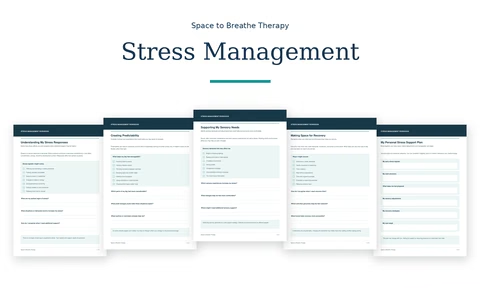
Stress Management: Five Ways to Support Your Brain is a six-page PDF workbook designed to help you recognise your personal stress responses, understand what contributes to overwhelm and identify practical strategies that work for you.
The workbook combines accessible information, guided reflection activities and a personalised stress support plan.
What’s included in the workbook?
Page 1: Understanding My Stress Responses
Recognise how stress may affect your thoughts, emotions, body and everyday functioning. Identify early warning signs, consider situations that increase pressure and reflect on when additional support might be helpful.
Page 2: Creating Predictability
Consider how routines, preparation and clearer expectations can reduce unnecessary demands. Identify situations that feel unpredictable and reflect on small changes that could make your day more manageable.
Page 3: Supporting My Sensory Needs
Recognise sensory experiences that may contribute to stress, including noise, lighting, crowded environments and uncomfortable textures. Explore adjustments that could make your surroundings more comfortable and accessible.
Page 4: Making Space for Recovery
Reflect on how you recognise the need for rest and recovery. Identify activities, environments and adjustments that genuinely help you feel restored, while considering how to make recovery time more accessible.
Page 5: Finding Helpful Grounding Strategies
Consider five practical approaches to managing moments of heightened stress, including noticing your surroundings, changing your environment, releasing physical tension, reducing immediate demands and connecting with support.
Reflect on which strategies feel comfortable, which you would prefer to avoid and what you might try when stress begins to increase.
Page 6: My Personal Stress Support Plan
Bring your reflections together into a personalised plan covering your early stress signals, main stressors, helpful routines, sensory adjustments, recovery strategies and next steps.
This page includes six fillable text fields, allowing you to complete your plan digitally and revisit it whenever your needs change.
Who is this workbook for?
This workbook may be helpful for anyone experiencing everyday stress, emotional overwhelm, sensory difficulties or periods of increased pressure.
It may be particularly useful for people who experience fluctuating energy, neurodivergent individuals, those managing ongoing health conditions or anyone who would benefit from a more personalised approach to stress management.
Therapists, counsellors, coaches and support workers may also find it useful when helping someone recognise stress patterns and develop practical support strategies.
A gentle reminder
There is no single approach to stress management that works for everyone.
Some people benefit from grounding activities or predictable routines, while others may need environmental adjustments, additional recovery time or changes to the demands placed upon them.
You don’t have to force yourself to use strategies that feel uncomfortable or ineffective.
The aim is to understand your needs, recognise what helps and develop a flexible approach that supports your wellbeing rather than adding further pressure.
Maggie,
Space to Breathe Therapy




