





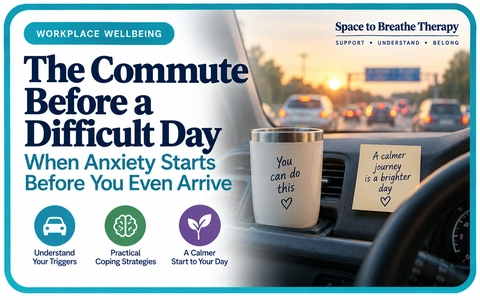
The Commute Before a Difficult Day
When Anxiety Starts Before You Even Arrive
An interactive space to explore anticipatory anxiety, difficult journeys, workplace pressures and kinder ways of arriving.
Sometimes the Day Starts Before Work
For some people, anxiety begins during the journey because of what they expect to meet when they arrive. Explore the four stages of your journey.
What other people may not see
A journey may involve sensory demands, difficult transitions, uncertainty, social expectations, masking, fear of criticism or previous distressing experiences.
What Is My Anxiety Telling Me?
Use the sliders to explore which parts of the journey and working day feel demanding. There are no right or wrong answers.
What stands out?
This is a personal reflection, not a clinical anxiety score.
A Kinder Arrival
You do not have to force yourself through a timed calming exercise. This space offers an optional five-minute pause to notice what you need.
Optional silent five-minute timer
Take the time you need, without a deadline.
Optional breathing or grounding
Choose a gentle breathing guide or a non-breathing grounding exercise. Breathing exercises are not right for everyone.
Notice the seat, your feet or something steady around you.
Arriving safely
If driving, use interactive controls only once you have safely parked, switched off the engine and can give the tool your attention. Never use the timer or breathing ball while driving.
Is It the Journey, the Workplace, or Both?
Choose the things that may be influencing your experience.
A question worth asking
When the journey is difficult because of what is waiting at work, coping strategies alone may not solve the problem. Workload, bullying, inaccessible conditions or difficult relationships may need attention.
What Could Make the Start of Work Easier?
Explore changes that could support a more manageable journey and transition into work.
For managers and employers
Consider arrival times, sensory environments, meeting expectations, communication, workload and the emotional effect of difficult workplace experiences.
Support should address underlying barriers, rather than asking someone only to become better at tolerating distress.
My Commute & Arrival Support Plan
Bring together what you have noticed and choose a manageable next step. You do not need to share this plan.
My saved reflections
When additional support matters
If anxiety is becoming overwhelming, your journeys are increasingly difficult, or you experience panic or distress regularly, professional support and a review of your working conditions may be helpful.
Bullying and unsafe situations require appropriate workplace action, not simply individual coping strategies.




