





Understanding Disability in the Workplace - A practical guide to disability awareness, accessibility and inclusion
Disability is a broad and varied experience. It can affect people physically, cognitively, neurologically, emotionally or through sensory differences, and not all disabilities are immediately visible.
People may experience disability differently depending on their individual circumstances, working environment and the support available to them.
Understanding disability in the workplace involves more than recognising individual needs. It also means considering how workplace environments, attitudes, expectations and organisational practices can create or remove barriers to participation.
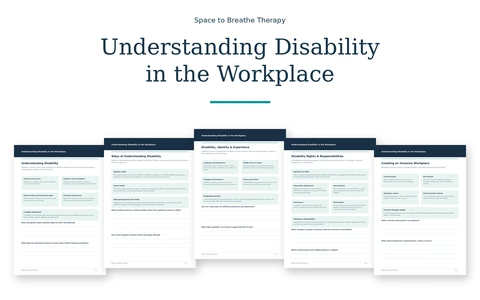
This six-page PDF workbook combines accessible information, practical examples and guided reflections to support a greater understanding of disability, workplace responsibilities and meaningful inclusion.
What’s included?
1. Understanding Disability
Develop a broader understanding of disability and the different ways it may affect everyday working experiences. Consider visible and non-visible disabilities, individual differences and the importance of recognising barriers rather than making assumptions about people’s abilities.
2. Ways of Understanding Disability
Learn about the medical and social models of disability and how they influence the way disability is understood. Consider the relationship between individual experiences, workplace environments and the barriers that can affect access and participation.
3. Disability, Identity & Experience
Reflect on how people understand and describe their own experiences of disability. Consider individual language preferences, privacy, fluctuating needs and the importance of respectful communication without making assumptions.
4. Disability Rights & Responsibilities
Gain an introduction to workplace protections under the Equality Act 2010, including disability discrimination, reasonable adjustments, harassment and victimisation. Consider the responsibilities employers may have in creating accessible working conditions and responding to disability-related barriers.
5. Creating an Inclusive Workplace
Consider what meaningful disability inclusion looks like in everyday working environments. Reflect on accessible communication, inclusive recruitment, workplace culture and the importance of involving disabled people in decisions that affect them.
6. My Disability Inclusion Reflection
Bring together your learning through guided reflection questions. Consider assumptions you may have reconsidered, how workplace environments influence accessibility and what practical changes could encourage greater understanding and inclusion.
Who is this workbook for?
This workbook is suitable for anyone who wants to develop their understanding of disability in the workplace.
It may be particularly helpful for:
- Disabled and non-disabled employees.
- Managers, supervisors and team leaders.
- Employers and HR professionals.
- Workplace wellbeing and inclusion practitioners.
- People supporting colleagues with disability-related access needs.
- Anyone interested in creating more accessible and inclusive working environments.
The workbook is designed to encourage reflection and understanding rather than assess an individual’s disability or determine their support needs.
A supportive reminder
Disability inclusion is not simply about expecting individuals to adapt to existing workplace environments.
It also involves recognising how organisational practices, physical spaces, communication methods and workplace attitudes can create unnecessary barriers.
Under the Equality Act 2010, employers may have legal responsibilities to prevent disability discrimination and make reasonable adjustments where the relevant requirements apply.
Meaningful inclusion requires listening to disabled people, respecting individual experiences and recognising that accessibility is a shared responsibility.
An inclusive workplace is one where people are respected, barriers are addressed and everyone has a meaningful opportunity to participate and contribute.
This workbook provides general information and reflective guidance. It does not replace individual legal, medical or occupational health advice.
Maggie,
Space to Breathe Therapy




