





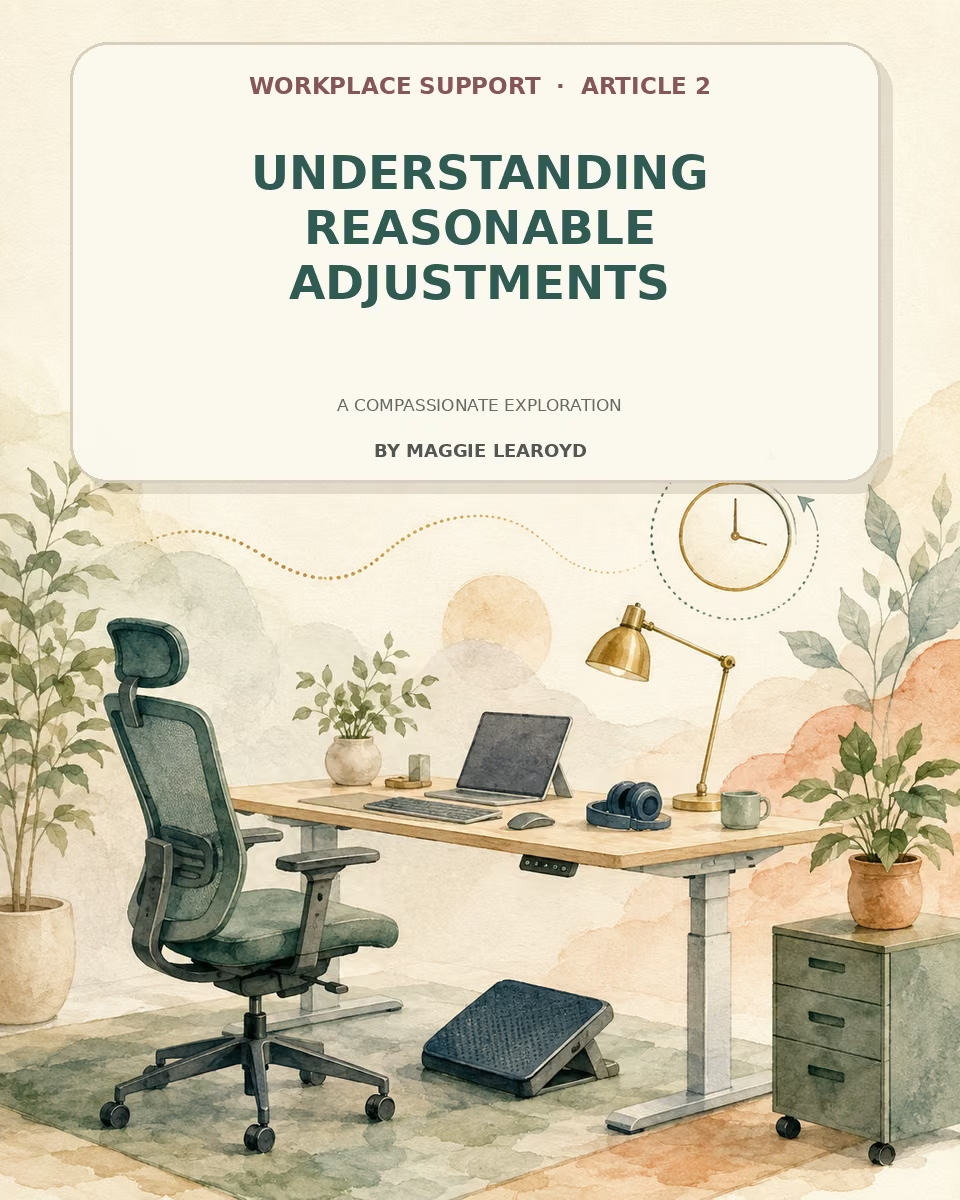
Understanding Reasonable Adjustments
Workplace Support - Article 2
There are times when depression changes ordinary life so gradually that we begin blaming ourselves before we recognise what is happening. Understanding Reasonable Adjustments is a question many people carry quietly, often alongside guilt, confusion or the fear that they should simply be coping better.
In this article, I offer a compassionate explanation of what may be happening beneath the surface. Reasonable adjustments are practical changes that help remove these barriers. They allow people to access the same opportunities as their colleagues while recognising that everyone works differently. Reasonable adjustments are not about giving someone special treatment. They are about creating fairness and ensuring that an individual's health condition or disability does not unnecessarily limit their ability to contribute. What Are Reasonable Adjustments? A reasonable adjustment is any change made to the workplace, working practices or equipment that helps an employee carry out their role more
The resource explores working hours, the physical workplace, equipment, communication methods. It looks beyond labels and considers how depression can affect the nervous system, thinking, energy, emotion, relationships and everyday functioning. Where the article focuses on work, it also considers the pressure to appear capable while privately using enormous energy just to get through the day.
I have written this for people who recognise themselves in the question, and for relatives, colleagues, managers and professionals who want to respond with greater understanding. The aim is not to make assumptions or offer a quick answer. It is to create space for the experience to make sense.
Throughout the article, I encourage curiosity rather than criticism. Difficulty concentrating is not carelessness. Exhaustion is not laziness. Emotional numbness is not a lack of love. Crying easily is not weakness. Needing support at work does not mean someone has stopped being capable or valuable.
My hope is that this resource helps the reader feel less alone and gives them language for something that may have been difficult to explain. Understanding does not remove every challenge, but it can reduce shame and make the next supportive step feel more possible.
Please remember that this article provides general information rather than a diagnosis. If depression is affecting daily life, physical health or safety, speaking with a GP or appropriately qualified mental-health professional can be an important form of care.
By Maggie Learoyd
Psychotherapist | ADHD, Autism & ARFID Specialist
Founder of Space to Breathe Therapy




