





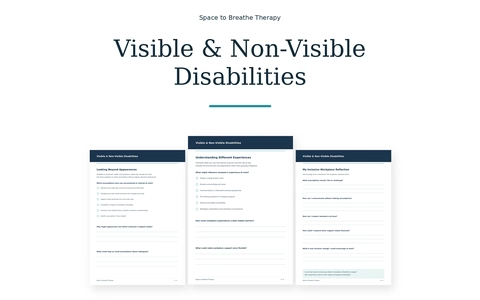
Visible & Non-Visible Disabilities - A practical workplace worksheet for challenging assumptions, respecting individual experiences and encouraging inclusion
Disabilities are not always immediately apparent. Some people experience visible physical differences, while others live with conditions or impairments that may not be noticeable to those around them.
Some disabilities can also fluctuate, meaning a person’s abilities, energy levels or support needs may vary from day to day.
In workplace environments, assumptions based on appearance can create unnecessary barriers. Someone may appear comfortable, communicate confidently or complete certain tasks while still experiencing difficulties that others cannot see.
This three-page PDF worksheet provides a gentle, structured opportunity to reflect on these assumptions, recognise different experiences of disability and consider practical ways to support a more accessible and inclusive workplace.
Rather than offering lengthy explanations, the worksheet uses simple questions, tick-box activities and guided writing spaces to encourage personal reflection.
What’s included?
1. Looking Beyond Appearances
Consider how assumptions about disability can influence workplace attitudes and expectations.
Through a practical tick-box activity, reflect on common misconceptions, such as assuming that someone who appears well cannot be experiencing difficulties or that a person’s support needs should remain the same every day.
Additional reflection questions encourage you to consider why appearance may not reflect someone’s experiences and how to avoid making assumptions about colleagues.
2. Understanding Different Experiences
Recognise that disability experiences and workplace support needs can vary between individuals and over time.
Consider factors such as fatigue, pain, sensory environments, communication demands, fluctuating symptoms and workplace accessibility.
Use guided questions to reflect on how workplace expectations may unintentionally create barriers and what changes could make support more flexible and accessible.
3. My Inclusive Workplace Reflection
Bring together your learning through a personalised reflection worksheet.
Consider:
- Assumptions you would like to challenge.
- Ways to communicate without making judgements about someone’s abilities.
- How to respect individual privacy and confidentiality.
- How to respond when someone’s support needs fluctuate.
- One practical change that could encourage greater workplace inclusion.
This final page can also be used independently as a reminder of the actions you would like to take.
Who is this worksheet for?
This worksheet is suitable for anyone interested in developing a more thoughtful and inclusive understanding of disability in the workplace.
It may be particularly helpful for:
- Employees who want to challenge assumptions about disability.
- Managers and supervisors supporting colleagues with different access needs.
- Employers and HR professionals.
- Workplace wellbeing and inclusion practitioners.
- People interested in disability awareness and accessible working environments.
The worksheet does not require readers to disclose personal information or identify whether someone else has a disability.
Instead, it encourages respectful communication, awareness of individual differences and consideration of workplace practices that may create unnecessary barriers.
A supportive reminder
You cannot always recognise someone’s disability, difficulties or support needs simply by looking at them.
A person may appear well while managing significant symptoms, and someone who can complete a task on one occasion may experience different limitations on another day.
Respectful workplace inclusion means listening without making assumptions, protecting privacy and recognising that support needs can change.
It also means understanding that disabled people should not have to continually justify their experiences to receive respect and consideration.
You do not need to understand every detail of someone’s disability to respect their experiences, listen to their needs and help create a more accessible workplace.
This worksheet provides general information and reflective guidance. It does not replace individual occupational health, medical or legal advice.
Maggie,
Space to Breathe Therapy




