





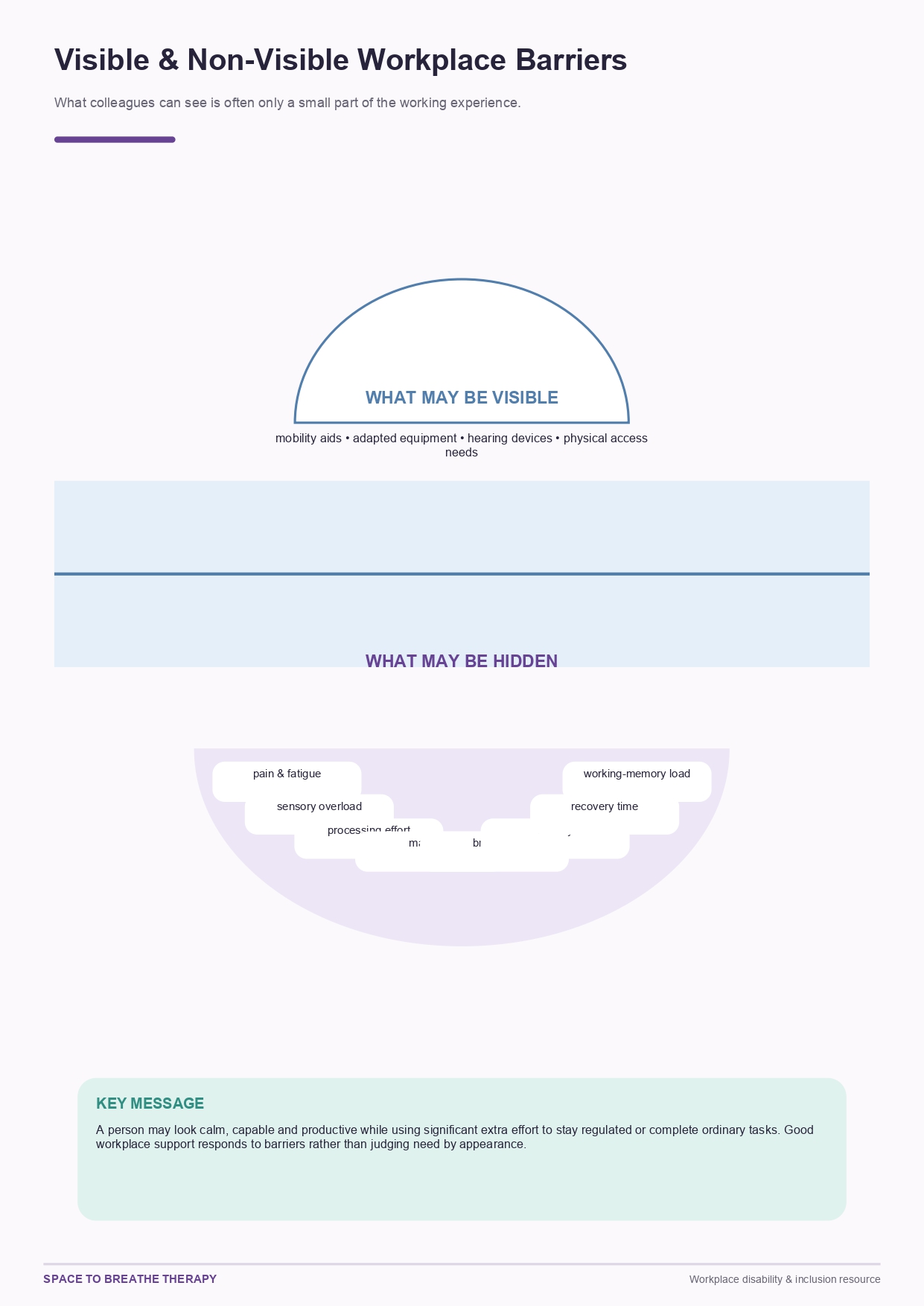
This is an important resource because what we see on the outside is often only a very small part of somebody’s experience at work.
Some workplace needs may be more visible, such as mobility aids, adapted equipment, hearing devices or physical access requirements. But many barriers can be completely hidden — including pain, fatigue, sensory overload, processing effort, masking, brain fog, anxiety, recovery time and working-memory demands.
I particularly like the iceberg-style visual in this resource because it helps us think about everything that may be happening beneath the surface.
Someone can arrive at work, smile, communicate, complete their tasks and appear completely capable while using an enormous amount of additional energy simply to get through their working day.
That is why I believe we need to move away from thinking:
“They look fine.”
and towards asking:
“What is this person experiencing, and what could make their working day more manageable?”
We should never judge somebody's need for support by how their disability, condition or difficulty looks from the outside.
Good workplace support responds to the barrier — not the appearance of the person experiencing it.
With love,
Maggie
Space to Breathe Therapy




