





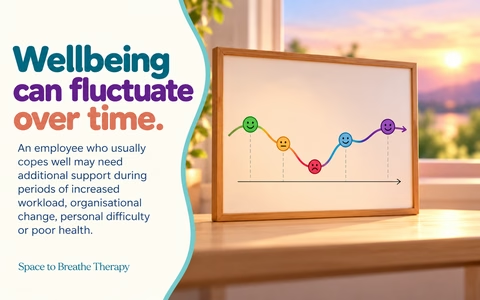
Wellbeing Can Fluctuate Over Time
Understanding Changing Support Needs in the Workplace
An employee who usually copes well may need additional support during periods of increased workload, organisational change, personal difficulty or poor health.
Workplace wellbeing is not fixed. Our emotional, psychological and physical wellbeing can change over time, influenced by what is happening both inside and outside work.
Someone who usually feels confident, productive and able to manage their responsibilities may experience periods when everyday demands become more difficult. Increased workloads, workplace uncertainty, changes in management, family responsibilities, relationship difficulties, bereavement, health concerns or prolonged stress can all influence how someone feels and functions.
These changes do not mean that an employee has become less capable, less committed or less resilient. They may simply be experiencing circumstances that require additional understanding, flexibility or support.
Recognising that wellbeing fluctuates is an important part of creating a psychologically safe and compassionate working environment.
The accompanying downloadable PDF provides practical information, reflection activities and guidance for employees and managers, helping individuals recognise changing needs and identify supportive ways forward.
Why Workplace Wellbeing Changes
Our ability to manage demands depends on many factors, including our physical health, emotional resources, environment, relationships, responsibilities and opportunities for recovery.
There may be periods when someone feels motivated, focused and comfortable managing a demanding workload. At other times, those same responsibilities may feel overwhelming.
Changes can happen gradually or unexpectedly.
For example, an employee who has managed their role successfully for several years may begin experiencing difficulties following organisational restructuring. Another person may find that caring responsibilities or poor sleep temporarily affect their concentration and energy.
Someone living with a long-term health condition, disability or neurodivergence may also experience changing support needs depending on their environment, symptoms, workload or available resources.
Past performance does not always indicate someone's current capacity or support needs.
Understanding this helps move workplace conversations away from assumptions and towards individual circumstances.
Recognising When Someone May Need Additional Support
Changes in wellbeing are not always immediately visible.
An employee may continue arriving on time, completing tasks and meeting expectations while privately experiencing anxiety, exhaustion or increasing difficulty coping.
Others may show changes in concentration, communication, confidence, attendance or their ability to manage everyday responsibilities.
Possible indicators include increased tiredness, withdrawal from colleagues, difficulty making decisions, reduced motivation, heightened emotional responses, changes in work performance or becoming overwhelmed by tasks that previously felt manageable.
However, these signs should never automatically be interpreted as evidence of a mental health condition or poor performance.
A supportive approach involves creating opportunities for respectful conversations rather than making assumptions about what someone is experiencing.
Why Flexibility and Understanding Matter
Support does not always need to involve significant changes or lengthy formal processes.
Sometimes relatively small adjustments can make an important difference.
An employee experiencing a demanding period may benefit from temporary changes to deadlines, clearer priorities, additional supervision, quieter working arrangements, more frequent check-ins or flexibility around appointments.
Others may require a formal review of their workload, reasonable adjustments, occupational health advice or a more structured support plan.
What matters is recognising that support should reflect the individual's circumstances rather than assuming the same approach will work for everyone.
Flexibility should also be accompanied by realistic expectations. Asking someone what they need is only helpful when there is a genuine willingness to consider appropriate changes.
The Role of Managers and Employers
Managers have an important role in recognising that employee wellbeing can change.
A person who previously required very little support may benefit from additional guidance during difficult periods. This should not automatically be seen as a reduction in their professionalism or ability.
Supportive workplace practices include:
- Creating regular opportunities for confidential wellbeing conversations.
- Reviewing workloads and priorities during demanding periods.
- Responding compassionately to changes in personal circumstances.
- Considering appropriate temporary or longer-term workplace adjustments.
- Avoiding assumptions based on previous performance.
- Respecting confidentiality and individual preferences.
- Reviewing support as circumstances change.
In the UK, employers also have responsibilities relating to workplace health and safety, and reasonable adjustments may be required where an employee meets the legal definition of disability under the Equality Act 2010.
A psychologically safe workplace allows people to communicate when they are struggling without automatically fearing judgement, dismissal or damage to their professional reputation.
Supporting Yourself Through Changing Circumstances
Employees can also benefit from recognising their own patterns of wellbeing.
This may involve noticing changes in sleep, mood, energy, concentration, stress levels or how manageable ordinary responsibilities feel.
Taking time to identify what has changed can help clarify whether additional rest, adjustments, practical assistance or professional support may be useful.
It can also be helpful to remember that needing support during one period does not mean the same level of support will always be required.
Wellbeing can improve as circumstances change, pressure reduces or appropriate support becomes available.
The aim is not to maintain identical levels of productivity every day, but to develop a sustainable relationship with work that recognises individual needs and changing circumstances.
What the Downloadable PDF Offers
The accompanying Wellbeing Can Fluctuate Over Time PDF is designed to turn understanding into practical action.
Rather than simply explaining that wellbeing changes, the guide helps individuals explore how these fluctuations may affect their working lives and what can be done to provide appropriate support.
Practical Benefits of the PDF
Recognising changing wellbeing needs
The guide helps readers identify possible changes in emotional wellbeing, concentration, energy, confidence and ability to manage workplace demands.
Understanding contributing factors
It explores how increased workloads, organisational changes, personal difficulties and physical or mental health concerns can influence someone's capacity at different times.
Encouraging supportive conversations
Employees and managers can use the information to approach wellbeing discussions with greater sensitivity, understanding and respect.
Identifying practical workplace adjustments
The PDF considers ways of adapting responsibilities, communication, deadlines, working arrangements and support during challenging periods.
Personal reflection activities
Readers are encouraged to consider their own wellbeing patterns, recognise situations that increase pressure and identify what helps them feel supported.
Creating a flexible support plan
A practical planning section helps individuals think about current challenges, helpful adjustments, available support and when arrangements might need reviewing.
Supporting managers and HR teams
The resource can also inform wellbeing check-ins, return-to-work discussions, supervision meetings and wider conversations about employee support.
Because the PDF can be downloaded, saved and revisited, individuals can return to the information as their circumstances change rather than feeling they must address everything immediately.
A Resource for Employees, Managers and Organisations
This resource is suitable for employees experiencing changing demands, managers supporting team members, HR professionals, workplace wellbeing leads and organisations seeking to build more compassionate working environments.
It may also be particularly helpful during periods of organisational change, increased work pressure, recovery from illness, return-to-work arrangements or changing personal circumstances.
By encouraging early recognition and supportive conversations, the guide can help individuals and organisations respond to difficulties before they become more entrenched.
Final Thoughts
Wellbeing does not follow a perfectly straight line.
There will be periods when we feel capable, motivated and comfortable managing responsibilities, alongside times when life or work places greater demands on our emotional and physical resources.
What someone needs today may be different from what they needed six months ago, and it may change again in the future.
Recognising these fluctuations helps create workplaces where support is responsive, expectations are realistic and individuals are treated with understanding rather than judgement.
Needing additional support does not erase someone's abilities, achievements or previous contributions.
Sometimes the most meaningful support begins with a simple conversation, a willingness to listen and the recognition that circumstances can change.
Space to Breathe Therapy
Supporting healthier workplaces through understanding, compassion, flexibility and practical wellbeing resources.
This resource provides general wellbeing information and does not replace individual medical, psychological, occupational health or legal advice.




