





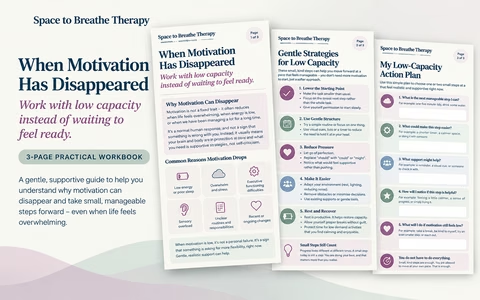
When Motivation Has Disappeared
Work with Low Capacity Instead of Waiting to Feel Ready
Sometimes even the smallest tasks can feel overwhelming. Things that once seemed manageable may become difficult to begin, maintain or complete. When motivation disappears, it can be easy to blame yourself or feel frustrated by how little you seem able to achieve.
But low motivation is not necessarily laziness or a lack of willpower. Stress, burnout, emotional exhaustion, poor sleep, sensory overload, executive-functioning difficulties and ongoing life pressures can all affect our ability to get started.
This compassionate three-page practical workbook from Space to Breathe Therapy helps you understand what might be affecting your motivation and explore realistic ways to move forward without adding more pressure.
What's Inside
- Understanding Low Motivation: Explore why motivation can disappear and how stress, exhaustion, neurodivergence and everyday demands may affect your capacity.
- Gentle Low-Capacity Strategies: Discover ways to make tasks smaller, introduce simple routines, reduce expectations and remove unnecessary barriers.
- Making Things Easier: Explore practical adjustments, reminders, accessible tools and supportive environments.
- Rest and Recovery: Understand why rest matters and why constantly pushing yourself is not always the answer.
- Personal Reflection Exercises: Identify what's making life difficult and what might help you feel more supported.
- My Low-Capacity Action Plan: Create one manageable next step, identify the support you need and recognise progress without expecting perfection.
Small Steps Still Count
You do not need to feel motivated before taking a step forward. Sometimes the most helpful approach is to work with the energy and capacity available to you today.
Progress might mean completing one small task, asking for help, changing an expectation or recognising that rest is what you need.
This workbook encourages a compassionate, realistic approach to everyday challenges, particularly for people experiencing overwhelm, burnout, ADHD, autism, anxiety or emotional exhaustion.
You do not have to do everything. One manageable step is enough for today.
Who Is This Workbook For?
Suitable for adults, young people, neurodivergent individuals and anyone experiencing reduced motivation, overwhelm or difficulty getting started. It can also be used alongside therapy, coaching or other wellbeing support.
The workbook contains three printable A4 pages with practical guidance and space for personal reflections.
Space to Breathe Therapy
Support • Understand • Belong
A supportive educational resource designed to encourage self-understanding, realistic expectations and sustainable progress. It does not replace individual psychological or medical support.