





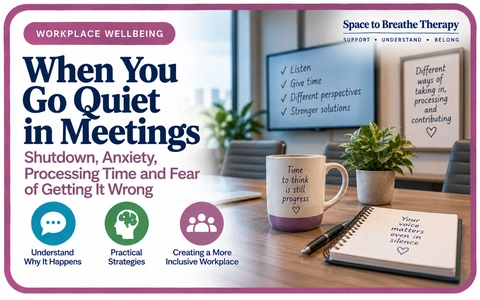
WHEN YOU GO QUIET IN MEETINGS
Shutdown, Anxiety, Processing Time and Fear of Getting It Wrong
Being quiet in a meeting does not mean somebody has nothing to contribute.
For some people, meetings demand several things at once: listening, processing information, reading social cues, working out when to speak, managing sensory input and finding the right words quickly enough to join a fast-moving conversation.
This Workplace Wellbeing resource explores what may sit underneath meeting silence.
The three-page downloadable guide looks at processing time, anxiety, fear of getting things wrong, previous criticism, ADHD, autism, dyslexia, shutdown and sensory overload. It also explores why somebody may know exactly what they wanted to say ten minutes after the meeting has finished.
Importantly, the resource does not treat the quiet employee as the problem. It asks whether the meeting itself makes room for different ways of thinking and communicating.
It includes practical ideas such as advance agendas, written questions, processing time, clearer turn-taking, alternatives to speaking, follow-up contributions and ways managers can create more inclusive meetings without putting quiet employees unexpectedly on the spot.
A person should not have to be the fastest voice in the room for their thinking to matter.
Space to Breathe Therapy
Support • Understand • Belong




