





Working Memory & Depression
FACTS — Understanding Working Memory Difficulties and Their Impact on Everyday Working Life
Understanding Working Memory and Depression
Depression can affect more than a person's mood. It can also influence concentration, memory, information processing, planning, decision-making and the ability to organise everyday activities.
One cognitive function that can become particularly difficult is working memory.
Working memory is the mental process that allows us to temporarily hold information in mind and use it while completing an activity.
For example, working memory helps us remember what someone has just said, follow several instructions, keep track of a conversation or remember what we intended to do next.
When someone experiences depression, the processes involved in attention and working memory may become less efficient.
An employee who previously managed multiple responsibilities confidently may begin forgetting instructions, losing track of tasks or struggling to retain information during conversations.
These difficulties do not necessarily mean the employee lacks intelligence, professional knowledge or commitment. They may be experiencing genuine cognitive effects associated with depression.
Understanding working memory difficulties can help employees identify practical support needs and enable employers to create more accessible working environments.
1. What Is Working Memory?
Working memory is sometimes described as a temporary mental workspace.
It allows us to hold information briefly while using it to complete an activity.
For example, working memory helps us:
- Remember a telephone number long enough to enter it.
- Follow spoken instructions involving several steps.
- Keep track of information during conversations.
- Remember the beginning of a sentence while listening to the end.
- Complete calculations mentally.
- Organise the steps involved in a task.
- Hold several pieces of information in mind while making a decision.
- Return to an activity after a brief interruption.
Working memory differs from long-term memory, which involves storing and retrieving information over longer periods.
Someone may clearly remember professional knowledge gained over many years but still struggle to retain three instructions given moments earlier.
This difference is important when considering workplace performance.
2. How Depression Can Affect Working Memory
Depression is associated with changes in attention, concentration and cognitive processing that can affect working-memory performance.
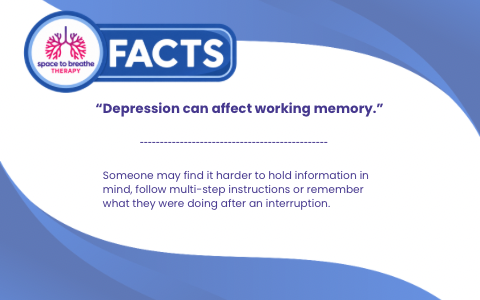
An employee may find it harder to hold information in mind while completing another activity.
They might begin a task, become interrupted and then struggle to remember what they were doing.
They may listen carefully during a meeting but find it difficult to retain several pieces of information at once.
Common experiences include:
- Forgetting instructions shortly after hearing them.
- Losing track of conversations.
- Difficulty remembering several tasks at once.
- Struggling to follow multi-step directions.
- Forgetting what they intended to say.
- Losing their place while reading.
- Needing information repeated.
- Difficulty organising a response to unexpected questions.
- Becoming mentally overwhelmed by too much information.
- Struggling to return to a task after interruptions.
These difficulties can vary in severity and are not experienced by everyone with depression.
They may also be influenced by fatigue, poor sleep, anxiety, medication and other health conditions.
3. Why Verbal Instructions Can Be Difficult
Verbal instructions often require someone to listen, understand, remember and act on information almost simultaneously.
For example, a manager might say:
“Please finish the report, email the updated figures to the team, rearrange tomorrow's meeting and check whether the client has responded.”
For someone experiencing working-memory difficulties, retaining all four instructions may be challenging.
They may remember the first task but forget the others, or recall that several things were requested without remembering the details.
This can create anxiety, particularly when they are worried about appearing inattentive or unreliable.
What can help?
Employers can provide instructions in writing, break information into smaller sections and clarify which task should be completed first.
It can also help to encourage employees to make notes or check their understanding without feeling embarrassed.
Needing written instructions is not evidence that someone has failed to listen. It may be an effective way of making information accessible.
4. Working Memory During Meetings
Meetings can place considerable demands on working memory.
Employees may need to listen to several people, remember earlier points, process new information and prepare responses while the conversation continues.
Depression-related cognitive difficulties can make this process more demanding.
Someone may experience:
- Losing track of the discussion.
- Forgetting a question before having time to answer.
- Difficulty remembering decisions.
- Struggling to take notes while listening.
- Forgetting information mentioned earlier.
- Becoming overwhelmed when several topics are discussed.
- Needing additional time to contribute.
An employee may remain interested and engaged while finding the cognitive demands of the meeting difficult.
What can help?
Practical adjustments include:
- Providing meeting agendas beforehand.
- Sharing important documents in advance.
- Allowing written contributions.
- Providing written summaries of decisions.
- Reducing unnecessary meetings.
- Allowing extra processing time.
- Avoiding unexpected requests to respond immediately.
- Offering appropriate note-taking support.
These adjustments can improve accessibility without removing the employee's opportunity to participate.
5. The Impact of Interruptions
Interruptions can be particularly challenging when working memory is under pressure.
An employee may be concentrating on a task when someone asks a question or requests assistance.
After responding, they may struggle to remember where they had reached.
This can happen repeatedly in busy workplaces.
As a result, tasks may take longer to complete, and the employee may become increasingly frustrated.
They may also feel that they are working hard without making the progress they expected.
What can help?
Employers can consider protected concentration time, quieter working areas, agreed communication methods and reduced unnecessary interruptions.
Employees may also benefit from recording the next step before switching tasks.
For example:
“I have completed the first section. Next, I need to check the figures.”
A short written reminder can make it easier to resume an activity.
6. Working Memory and Task Completion
Many workplace responsibilities involve remembering several stages of a task.
For example, completing a report may require gathering information, checking figures, organising sections, reviewing accuracy and submitting the finished document.
An employee experiencing working-memory difficulties may understand every part of the process but struggle to keep track of all the stages.
They may forget which steps have been completed or repeatedly check earlier work.
This can increase mental fatigue and reduce confidence.
What can help?
Breaking tasks into visible steps can reduce reliance on working memory.
A checklist might include:
- Gather the necessary information.
- Complete the first section.
- Check the figures.
- Review the document.
- Submit the report.
- Confirm completion.
Being able to tick off each stage allows the employee to focus on the current activity rather than trying to remember the entire sequence.
7. Mental Fatigue and Working Memory
Working-memory difficulties may become more noticeable when someone is mentally exhausted.
Depression can be associated with significant cognitive fatigue, where concentration and information processing require additional effort.
An employee may manage relatively well early in the day but experience greater difficulty with memory and organisation later.
They may find that tasks involving multiple steps, complex information or constant decision-making become particularly demanding.
What can help?
Possible adjustments include:
- Scheduling demanding activities when concentration is more manageable.
- Allowing suitable breaks.
- Reducing unnecessary multitasking.
- Providing written information.
- Breaking complex work into smaller stages.
- Reviewing workloads and priorities.
- Allowing additional time where reasonable.
The aim is to reduce unnecessary cognitive demands rather than expect the employee to overcome fatigue through greater effort alone.
8. The Emotional Impact of Forgetfulness
Working-memory difficulties can affect confidence and emotional wellbeing.
Someone who has always considered themselves organised and reliable may become distressed when they begin forgetting information.
They may worry about being judged by colleagues, making mistakes or disappointing their manager.
This can contribute to:
- Increased self-criticism.
- Anxiety about meetings.
- Repeatedly checking work.
- Avoidance of unfamiliar tasks.
- Reluctance to ask questions.
- Fear of appearing incapable.
- Reduced confidence in decision-making.
- Greater emotional exhaustion.
These feelings may create additional pressure that makes concentration harder.
An employee may be managing both the cognitive difficulty itself and the emotional impact of worrying about it.
Supportive communication can help reduce unnecessary shame and encourage employees to discuss their practical needs.
9. Working Memory Difficulties Are Not Laziness or Carelessness
Working-memory difficulties are sometimes misunderstood in workplace environments.
An employee who repeatedly asks for clarification may be described as not listening.
Someone who forgets instructions may be considered careless.
An individual who takes longer to complete a task may be viewed as inefficient.
However, these assumptions may overlook the effects of depression on cognitive functioning.
For example:
“You were told this yesterday.”
The employee may have been paying attention but struggled to retain the information.
“Why do you need everything written down?”
Written instructions may be an important accessibility tool.
“You keep asking the same questions.”
The employee may require clearer, more consistent information.
“You should be able to remember something this simple.”
Working-memory difficulties are not necessarily related to how important or straightforward a task appears to someone else.
A supportive workplace focuses on reducing barriers rather than criticising employees for difficulties that may be associated with their health.
10. Practical Workplace Adjustments
There are many ways to reduce reliance on working memory without compromising an employee's professional responsibilities.
Written Instructions
Provide important information in writing so it can be revisited.
Step-by-Step Task Lists
Break complex responsibilities into smaller stages with clear completion points.
Calendar Reminders
Allow the use of calendars, alarms and reminders to support appointments, meetings and deadlines.
Meeting Notes
Provide written summaries of key decisions, responsibilities and actions.
Clear Priorities
Identify which tasks are most important and avoid giving several conflicting instructions.
Reduced Interruptions
Offer protected working periods where practical.
Additional Processing Time
Allow employees time to understand information and organise responses.
Consistent Procedures
Use predictable systems and clear communication methods.
Accessible Digital Tools
Appropriate task-management applications, reminders and note-taking tools may help.
Supportive Check-Ins
Agreed conversations can help clarify tasks and identify difficulties before they become overwhelming.
Adjustments should be individualised according to the employee's role and circumstances.
11. Working Memory, ADHD, Autism and Other Conditions
Working-memory difficulties are not unique to depression.
They may also occur alongside ADHD, autism, anxiety, sleep disturbance, neurological conditions and other health difficulties.
Some employees experience more than one condition, which can make cognitive demands particularly challenging.
For example, an employee with ADHD and depression may already use organisational systems to manage working-memory difficulties but find those systems harder to maintain during a period of significant depression.
Similarly, autistic employees may experience additional challenges when verbal instructions are unclear, routines change unexpectedly or processing demands increase.
Support should consider the whole person's needs rather than assume every difficulty is explained by a single diagnosis.
12. Fluctuating Working Memory
Working-memory difficulties associated with depression may change from day to day.
Someone may remember information and manage complex tasks successfully during one period but struggle with the same responsibilities later.
Sleep, emotional distress, workload, medication and fatigue may contribute to these changes.
This can be frustrating for both the employee and those working with them.
However, inconsistency does not automatically indicate a lack of effort.
Being able to remember information on one day does not mean remembering it will require the same amount of effort every day.
Workplace adjustments should take account of fluctuating cognitive capacity where appropriate.
13. How Managers Can Provide Support
Managers can help by focusing on practical barriers and clear communication.
Helpful questions include:
- “Would it help if I sent those instructions in writing?”
- “Would a checklist make the stages easier to follow?”
- “Are there particular tasks where you lose track of the steps?”
- “Would fewer interruptions help you concentrate?”
- “Would meeting summaries be useful?”
- “Would it help to review priorities together?”
- “Are the current adjustments working for you?”
These questions allow employees to identify support needs without being required to explain every aspect of their mental health.
A supportive manager should avoid interpreting repeated requests for information as evidence of poor motivation or unwillingness.
14. Working Memory and the Equality Act 2010
In England, Scotland and Wales, depression may qualify as a disability under the Equality Act 2010 when it meets the relevant legal criteria.
This generally involves a substantial and long-term adverse effect on normal day-to-day activities.
Significant cognitive difficulties, including problems with memory and concentration, may be relevant to that assessment.
Where the legal duty applies, employers may need to make reasonable adjustments to reduce substantial disadvantages experienced by disabled employees.
Possible adjustments may include written instructions, accessible organisation systems, changes to communication methods or support with task management.
Whether a particular adjustment is reasonable depends on the circumstances.
Employers and employees can obtain further information through Acas and official government guidance.
15. When Additional Support May Be Needed
Persistent or worsening memory difficulties should not automatically be attributed to depression.
Memory problems may also be associated with sleep difficulties, medication effects, physical health conditions and other neurological or psychological factors.
A GP or appropriate healthcare professional can help assess significant cognitive changes.
Sudden confusion, especially when accompanied by other new neurological symptoms, requires urgent medical attention.
Employees may also benefit from psychological support, occupational health guidance or workplace adjustments.
The aim is to understand the underlying difficulties and identify appropriate support rather than expecting the person to manage everything alone.
16. Personal Reflection — Understanding My Working Memory Needs
These questions can help employees explore how working-memory difficulties affect their working day.
Remembering Information
Do I find it difficult to remember verbal instructions?
Do I often need information repeated?
Would written notes or reminders help?
Managing Tasks
Do I lose track of task steps?
Would checklists or visual plans make activities easier?
Do interruptions make it difficult to return to work?
Meetings and Communication
Do I struggle to remember information discussed during meetings?
Would agendas or written summaries help?
Do I need additional time to organise my thoughts?
Managing Cognitive Fatigue
Are there particular times when my memory feels less reliable?
Do complex tasks become harder when I am tired?
Would breaks or changes to my workload help?
Workplace Support
What would I like my manager to understand about my working-memory difficulties?
Which practical adjustments would make the greatest difference?
Would I benefit from occupational health or other professional advice?
These reflections are intended to support understanding without creating additional pressure.
17. A Practical Working Memory Support Plan
Employees may find it helpful to develop a simple plan for managing information and tasks.
Before beginning work:
Identify the most important tasks and write down the first step of each activity.
When receiving instructions:
Ask for written information or make notes in a format that is accessible.
During meetings:
Use an agenda, record important actions and request a written summary where appropriate.
When interrupted:
Write a brief reminder of where the task has reached before switching activities.
When mentally fatigued:
Review priorities, take appropriate breaks and reduce unnecessary multitasking.
When difficulties increase:
Discuss whether additional adjustments or support may be helpful.
The plan should remain flexible and reflect the person's individual preferences.
Final Thoughts — Forgetfulness Is Not a Reflection of Someone's Worth
Working-memory difficulties can affect everyday employment in ways that are not always visible.
Someone may struggle to remember instructions, follow conversations or manage several tasks at once while still possessing the knowledge and abilities required for their role.
Depression can increase the mental effort involved in processing and retaining information, particularly when fatigue, stress or sleep disturbance is also present.
Accessible communication, written instructions, supportive organisation systems and appropriate adjustments can reduce unnecessary barriers.
Employers can make a meaningful difference by recognising that memory difficulties are not always caused by carelessness or poor motivation.
An employee who needs information repeated, written down or broken into smaller steps is not necessarily less capable. They may simply need a more accessible way to manage information while experiencing depression.
Creating a supportive workplace means recognising individual differences and providing practical opportunities for employees to use their skills effectively.
Space to Breathe Therapy
Support • Understand • Belong
This resource is part of the Space to Breathe Therapy Support Hub, providing accessible information about mental health, disability, neurodivergence and workplace wellbeing.
For further information and support, visit:
https://spacetobreathetherapy.co.uk/
This resource provides general educational information and is not a substitute for individual medical assessment, mental health treatment, occupational health advice or specialist legal guidance.




