





When somebody is struggling at work, it can be very easy for the focus to fall on the individual — “Why can’t they manage?” or “Why are they finding this so difficult?”
This Workplace Barrier Map encourages us to look at things differently.
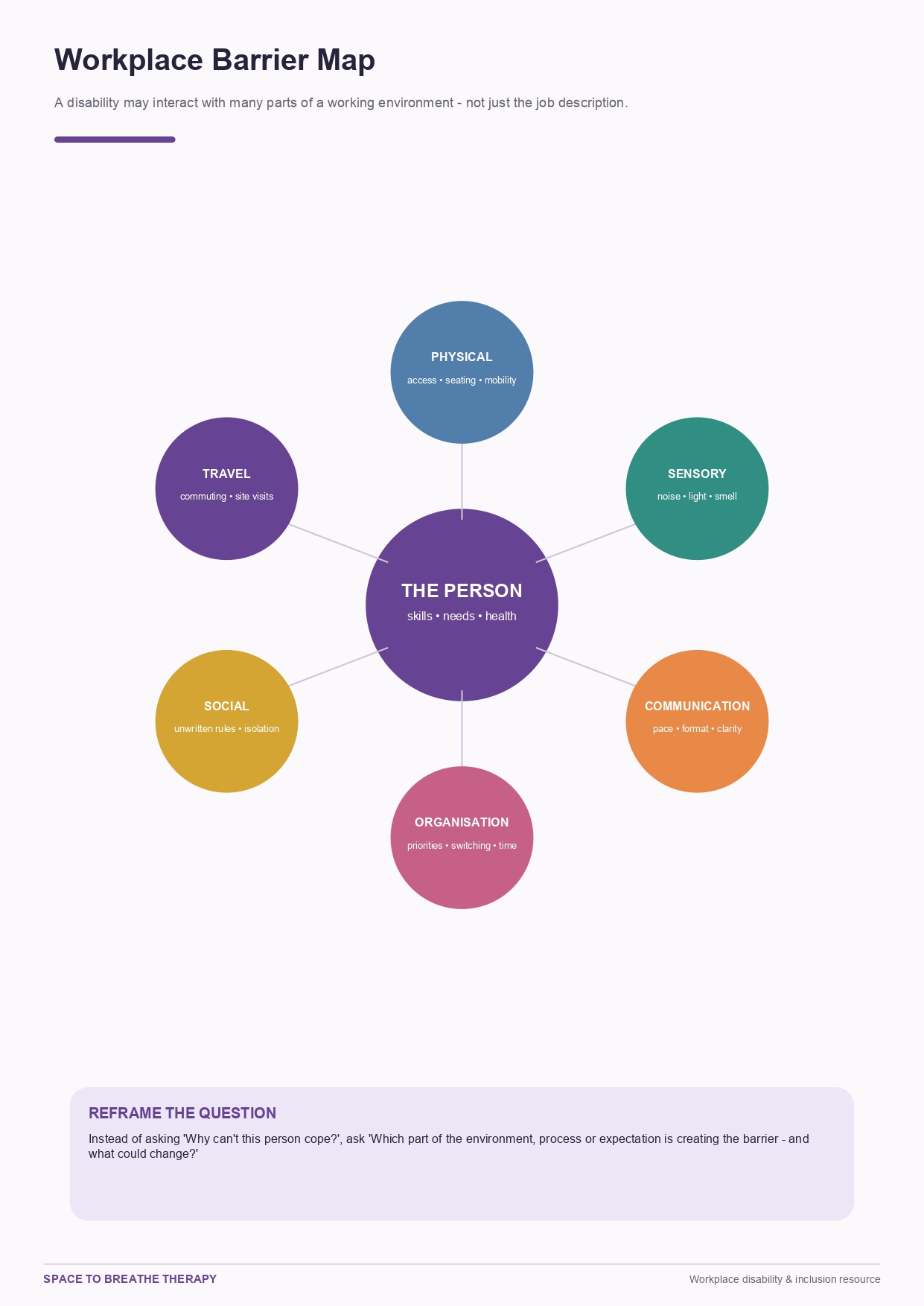
A disability can interact with many different parts of somebody’s working environment, not simply the tasks written in their job description. Physical access, seating and mobility can create barriers, but so can noise, lighting, communication styles, unclear priorities, task switching, time pressures, unwritten social expectations, isolation and even the journey to and from work.
This is why I think we need to change the question.
Instead of asking:
“Why can’t this person cope?”
we can ask:
“Which part of the environment, process or expectation is creating the barrier — and what could we change?”
That small change in thinking can completely change a conversation. It moves us away from seeing the person as the problem and towards identifying practical barriers that may actually be possible to reduce or remove.
Sometimes supporting somebody to thrive at work isn’t about changing the person at all. It’s about changing what is happening around them.
Maggie
Space to Breathe Therapy




