





Workplace conflict isn’t always as straightforward as it first appears.
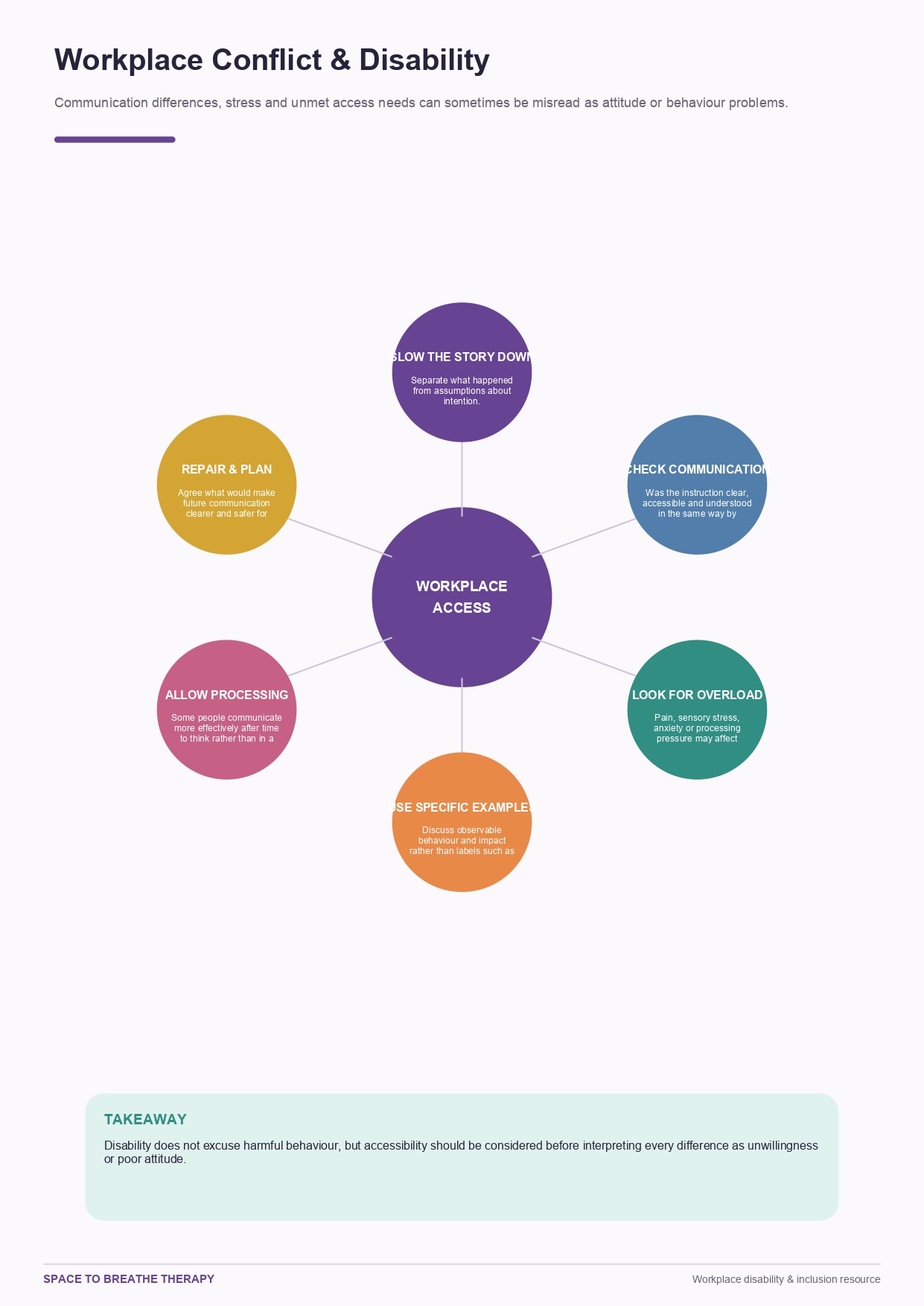
Communication differences, stress and unmet access needs can sometimes be interpreted as somebody having a poor attitude, being difficult or simply not wanting to cooperate. But there may be much more happening underneath the surface.
I really like the approach in this resource because it encourages us to slow the situation down before making assumptions.
Was the communication clear and accessible? Is the person experiencing sensory overload, pain, anxiety or processing pressure? Do they need additional time to think before responding? Are we talking about a specific behaviour and its impact, rather than attaching a label to the person?
It’s also about what happens next. Once we understand what contributed to the conflict, we can look at what might make communication clearer, safer and more accessible in the future.
There is an important balance here:
Disability doesn’t excuse harmful behaviour — but neither should every difference in communication or behaviour automatically be interpreted as unwillingness, rudeness or a poor attitude.
Sometimes the most useful thing we can do is replace judgement with curiosity and ask:
“What happened here, what might have contributed to it, and what could we do differently next time?”
That is how we move from conflict towards understanding, repair and better workplace support.
Maggie
Space to Breathe Therapy




