





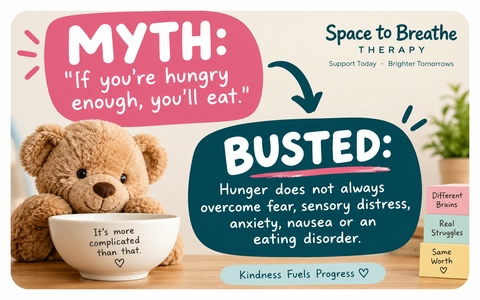
Bust a Myth Around Food: “If You’re Hungry Enough, You’ll Eat”
It sounds logical: if somebody becomes hungry enough, surely they will eventually eat. But eating is much more complicated than hunger alone.
For someone living with ARFID, an eating disorder, sensory processing differences, anxiety, nausea or a fear connected with food, the body can send a hunger signal while the brain and nervous system are still saying that eating does not feel safe. A person may desperately want to eat and still find themselves unable to manage the food in front of them.
This myth matters because it can lead to pressure: “You’ll eat when you’re hungry,” “Stop being difficult,” or even removing safe foods in the hope that hunger will force change. That pressure can increase anxiety and make eating harder.
Support starts with curiosity rather than judgement. What feels difficult? Is it the smell, texture, temperature or appearance? Is there a fear of choking, vomiting or becoming unwell? Is eating itself exhausting? Is there a safe food that would make nourishment possible right now?
The aim is not to win a battle over a plate. It is to understand the barrier and help the person feel safe enough to move forward.
Message from Maggie
Sometimes the most powerful change is replacing “Why won’t you eat?” with “What is making eating difficult, and how can I help?” A person does not need to prove that eating is hard before they deserve understanding.
Space to Breathe Therapy




