





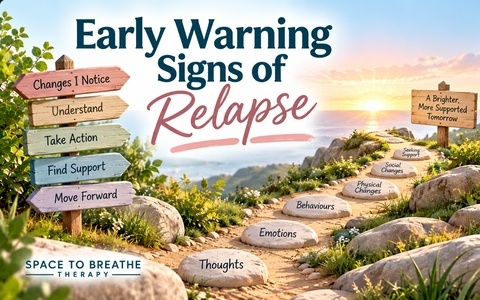
Early Warning Signs
of Relapse
Recognising changes early, responding with care
Recovery is rarely a straight line. A change in thoughts, routines, physical health or support needs can be a signal to reach out—not a reason for shame. This resource helps you notice patterns and make a compassionate plan.
What does relapse mean?
Relapse means a return or worsening of eating-disorder symptoms or behaviours after improvement. Sometimes the first changes are subtle: thoughts become louder, routines become less flexible, or a person begins avoiding situations that previously felt manageable.
A lapse—a difficult moment or a return of one behaviour—is not automatically a full relapse. Both deserve attention, and neither erases progress. Recovery is not measured by never struggling again.
There is no pass or fail
This guide does not diagnose relapse or calculate a risk score. Warning signs vary by person, diagnosis, health circumstances and treatment stage. You can skip any question and share your reflections with your treatment team if helpful.
Changes worth noticing
These are possibilities, not a checklist everyone must experience. A sign can also have another medical or emotional explanation.
Thoughts & emotions
More fear around eating, stronger food rules, appearance comparison, shame, perfectionism, anxiety, secrecy, or feeling that recovery is undeserved.
Food & routines
Increasing avoidance or restriction, renewed binge or purging behaviours, rigid rituals, difficulty following a care plan, or withdrawing from supported eating.
Body & physical wellbeing
New dizziness, fainting, weakness, dehydration, gastrointestinal changes, sleep disruption or other symptoms. Physical signs need medical assessment; they cannot be reliably attributed to relapse without evaluation.
Relationships & daily life
Avoiding social eating, cancelling appointments, withdrawing from people, concealing difficulties or finding it harder to ask for help.
Early signs can look different from the outside
Someone may appear outwardly well while experiencing serious eating-disorder symptoms. Body size or appearance cannot establish whether a person is safe. It is appropriate to seek help before symptoms become severe.
Different eating disorders, different signs
Choose a presentation to read examples. These are not diagnostic criteria or a substitute for individual assessment. Multiple presentations can overlap or change over time.
My early-sign map
Choose any experiences you recognise. This is for reflection, not scoring. You can also write your own signs. You do not have to share or complete this.
1. Thoughts or feelings I notice
2. Changes in everyday behaviour
3. Physical or sensory changes
What tends to happen before these changes?
Stress, transitions, illness, conflict, sensory overload, changes in routine or exposure to triggering content may contribute. A trigger does not mean you caused a relapse.
Responding before things become harder
The aim is to reconnect with appropriate support, not to manage every symptom alone.
Reconnect with care
Tell your GP, therapist, dietitian or eating-disorder team about new or returning symptoms. Early contact is worthwhile, even when you are unsure whether it is relapse.
Keep treatment collaborative
If you have an agreed meal, medication, insulin or safety plan, discuss difficulties with your clinicians rather than making independent changes. For severe restriction or undernutrition, nutritional changes may need medical supervision.
Reduce isolation
Consider asking someone to accompany you to an appointment, sit with you during a difficult time or help you explain what is happening.
Adjust the environment
Predictability, sensory accommodations, accessible communication and less appearance-focused conversation may make it easier to engage with care.
Choose a supportive next step
My compassionate relapse-response plan
You can return to this plan and change it as often as you need. It is not a replacement for your clinical relapse-prevention or emergency plan.
Save or take your plan with you
Your responses are saved only in this browser on this device when local storage is available. Avoid entering information on a shared device if privacy is a concern.
Clear responses
Clear all responses saved by this resource in this browser.
When extra help matters
Urgent medical concerns
Seek urgent medical assessment for fainting, significant weakness, dehydration, repeated vomiting, severe abdominal pain, rapidly worsening physical symptoms, or concerns about electrolyte disturbance. Chest pain, collapse, seizures, severe breathing difficulty or other immediate danger require emergency care. In the UK, call 999 for emergencies or NHS 111 for urgent guidance when appropriate.
For T1DE/diabulimia: Insulin restriction or omission can cause diabetic ketoacidosis, which can become life-threatening. Seek urgent diabetes-team or emergency medical advice; do not wait for this diary or a checklist.
For supporters
Notice changes without interrogation. Avoid comments about weight, size, appearance or “how much” someone has eaten. You might say: “I've noticed things seem harder lately. Would it help if we contacted your team together?”
Respect autonomy and confidentiality while acting on serious medical or safeguarding concerns. If the person is a child or dependent adult, follow their professional care and safeguarding arrangements.
A message from Maggie
Recovery is not undone because something feels difficult again. Sometimes we recognise a familiar thought or behaviour before we understand what has changed around us.
You deserve to be listened to at that early point, not only when things become a crisis. You can ask for help without having to prove how unwell you are.
Maggie · Space to Breathe Therapy
Further support
Space to Breathe Therapy · Beat · NHS eating-disorder guidance · NICE NG69
Educational information only. This resource cannot diagnose relapse or replace individual medical, psychological, dietetic, diabetes, swallowing or specialist eating-disorder care.
My Early Warning Signs & Support Plan
Space to Breathe Therapy · Eating Disorders




