





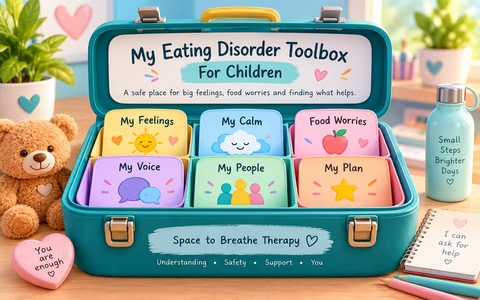
My Eating Disorder Toolbox
For Children
A safe place for big feelings, food worries and finding what helps.
You do not have to get everything right. You can choose what to explore, skip anything that feels too much, and ask a trusted grown-up to help.
🌈 My Feelings
Sometimes feelings around food are very big. You might feel worried, cross, sad, confused or overwhelmed. You might feel several things at once.
All feelings are allowed. You do not have to explain them perfectly.
How am I feeling right now?
Feelings can be uncomfortable, but they are not bad. You deserve kindness and support whatever you are feeling.
☁️ My Calm Toolbox
When our bodies feel worried, it can be harder to think, talk or eat. Calming activities may help us feel more supported. They do not have to make the feeling disappear.
🌬️ Gentle Breathing
If breathing exercises feel comfortable, breathe in gently and breathe out slowly. You do not need to count or hold your breath.
🧸 Comfort Object
Hold something soft, familiar or comforting. Notice how it feels in your hands.
🎧 Quiet Space
Ask for a quieter place, headphones or less talking if sounds feel too much.
🖐️ Grounding
Notice three things you can see, two things you can touch and one sound you can hear.
🖍️ Drawing
Draw a shape, pattern or picture. It does not need to look like anything.
🤝 Someone Beside Me
Sometimes having a trusted person nearby helps more than doing an activity alone.
Choose a calming idea
Calming activities are not a test. If something makes you feel worse, you can stop and try something else with a trusted grown-up.
🍽️ My Food Worries
Food worries can happen for different reasons. Some children worry about choking, being sick, smells, textures, body changes or doing something wrong.
Other children find it difficult to notice hunger, manage busy eating spaces or explain why eating feels hard.
You do not need to try a frightening food to use this toolbox.
What makes food feel difficult for me?
Allergies, swallowing difficulties and medical food restrictions need appropriate professional advice. This activity does not ask you to ignore safety needs or change your eating plan.
Listen carefully to the reason behind the child's worry. Avoid forcing foods, bargaining, commenting on amounts eaten or turning mealtimes into tests. Children with restrictive eating or eating disorders may need specialist assessment and an individualised care plan.
💬 My Voice Matters
Sometimes it is hard to find words, especially when you are worried or overwhelmed. You can use these cards to show someone what you need.
My Communication Cards
🤝 My Support People
You do not have to manage difficult feelings or food worries alone.
A support person might be someone at home, a teacher, a therapist, a healthcare professional or another trusted adult.
My Help Signal
Some children prefer a special word, colour or gesture to let someone know they need support.
Agree on what happens when the child uses their signal. Respond calmly, take their communication seriously and avoid making them repeatedly explain distress.
⭐ My Personal Support Plan
Let's put together some of the things that help you. You can ask a grown-up to write for you.
My Support Plan
My Eating Disorder Toolbox – For Children
spacetobreathetherapy.co.uk
A Note for Parents, Carers and Professionals
This toolbox supports communication, emotional understanding and practical comfort. It does not replace specialist assessment or treatment for an eating disorder.
Children can experience serious eating difficulties at any body size. If eating is restricted, weight or growth is affected, meals are becoming increasingly distressing, or there are signs of medical illness, seek advice from a GP or appropriate specialist service promptly.
For children with ARFID, autism, ADHD or sensory differences, support should be adapted to the child's needs rather than relying on pressure or reward-based eating challenges.
Useful UK resources include the NHS and Beat Eating Disorders.
A child does not have to explain their feelings perfectly to deserve help. The goal is understanding, safety and connection — not perfect answers.
Saved information stays in this browser where local storage is available. It is not sent to Space to Breathe Therapy. A trusted adult should help with storing or printing personal information, especially on shared devices.




