



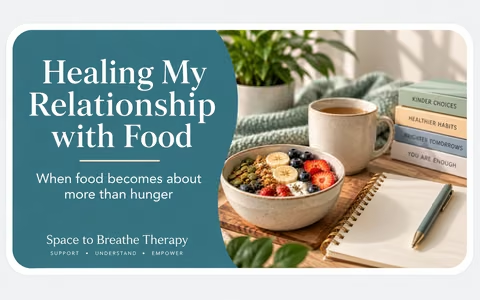
Emotional Relationships with Food

Emotional Relationships with Food - Understanding What Food Can Mean

Emotional Relationships with Food

Understanding What Food Can Mean

Our relationship with food is rarely just about hunger.

Food can become connected with comfort, safety, memories, routine, control, celebration, connection and emotion. For some people, eating becomes easier when life feels settled and much more complicated when they are stressed, anxious, lonely or overwhelmed.

Rather than judging these patterns, I think it is much more helpful to become curious about them.

What is food doing for me in this moment?

That question can tell us far more than simply asking what we have eaten.

Food Can Become a Form of Comfort

From very early in life, food can become associated with comfort and connection.

We celebrate with food.

Families come together around food.

Certain tastes remind us of people, places and experiences.

So it isn't surprising that during difficult periods we may reach for foods that feel familiar or comforting.

That doesn't mean you've done something wrong.

Sometimes food is simply meeting an emotional need as well as a physical one.

The important part is understanding what that need might be.

Sometimes Emotions Can Make Eating Harder

An emotional relationship with food isn't only about eating more.

Stress, anxiety, sensory overload, low mood or feeling out of control can also make eating much more difficult.

You may lose your appetite.

Foods you normally manage may suddenly feel impossible.

You might become more restrictive.

You may rely heavily on familiar or safe foods.

Or the thought of preparing and eating something can simply feel like another demand.

This is why I think we need to move away from labelling eating as simply “good” or “bad.”

There is often much more happening underneath.

A Tip From Me – Ask What You Need Before You Judge What You Eat

If you notice yourself reaching for food emotionally, or struggling to eat at all, try asking:

“What am I actually needing right now?”

Am I hungry?

Am I tired?

Am I anxious?

Do I need comfort?

Am I overwhelmed?

Do I need stimulation?

Do I need connection?

Do I simply need something familiar and safe?

You don't have to stop yourself from eating.

You're simply adding awareness instead of judgement.

Be Careful With Food Rules

Food can become stressful when our heads become filled with rules.

I shouldn't eat that.

I've been good today.

I've ruined everything now.

I need to make up for what I ate yesterday.

The more moral value we attach to food, the more guilt and anxiety can become part of eating.

Food isn't a measure of your worth.

One meal doesn't define your health.

And enjoying something doesn't require punishment afterwards.

Add Support Rather Than Shame

If your relationship with food feels difficult, try approaching it from:

“What could I add that might support me?”

rather than:

“What do I need to take away?”

More regular meals?

More safe foods?

More variety when it feels manageable?

More support?

More understanding of sensory needs?

More enjoyable experiences around eating?

Less pressure?

Sometimes progress begins by making food feel safer, not stricter.

A Little Reflection From Me

I think one of the most important changes we can make is moving from:

“Why am I like this with food?”

to:

“What has shaped my relationship with food?”

Those are very different questions.

One contains judgement.

The other creates space for understanding.

Our relationship with food can be influenced by childhood, sensory experiences, neurodivergence, dieting, body image, family messages, stress, trauma, health experiences and many other things.

Understanding those connections can help us begin building something different.

Your Relationship With Food Can Change

You don't have to achieve a “perfect” relationship with food.

There isn't one.

The aim can simply be less fear, less guilt, less pressure and more understanding.

Notice your patterns.

Get curious about your emotions.

Nourish yourself in ways that feel achievable.

Ask for support when you need it.

And remember that progress doesn't have to mean suddenly eating differently.

Sometimes progress is simply being able to sit with food and think:

“I don't need to fight myself today.”

Be kind to your mind.

Nourish your body in ways that work for you.

And give yourself time.

Your relationship with food is personal. It deserves understanding, not judgement.

Until next time, give yourself Space to Breathe.

With love, Maggie
Space to Breathe Therapy




