





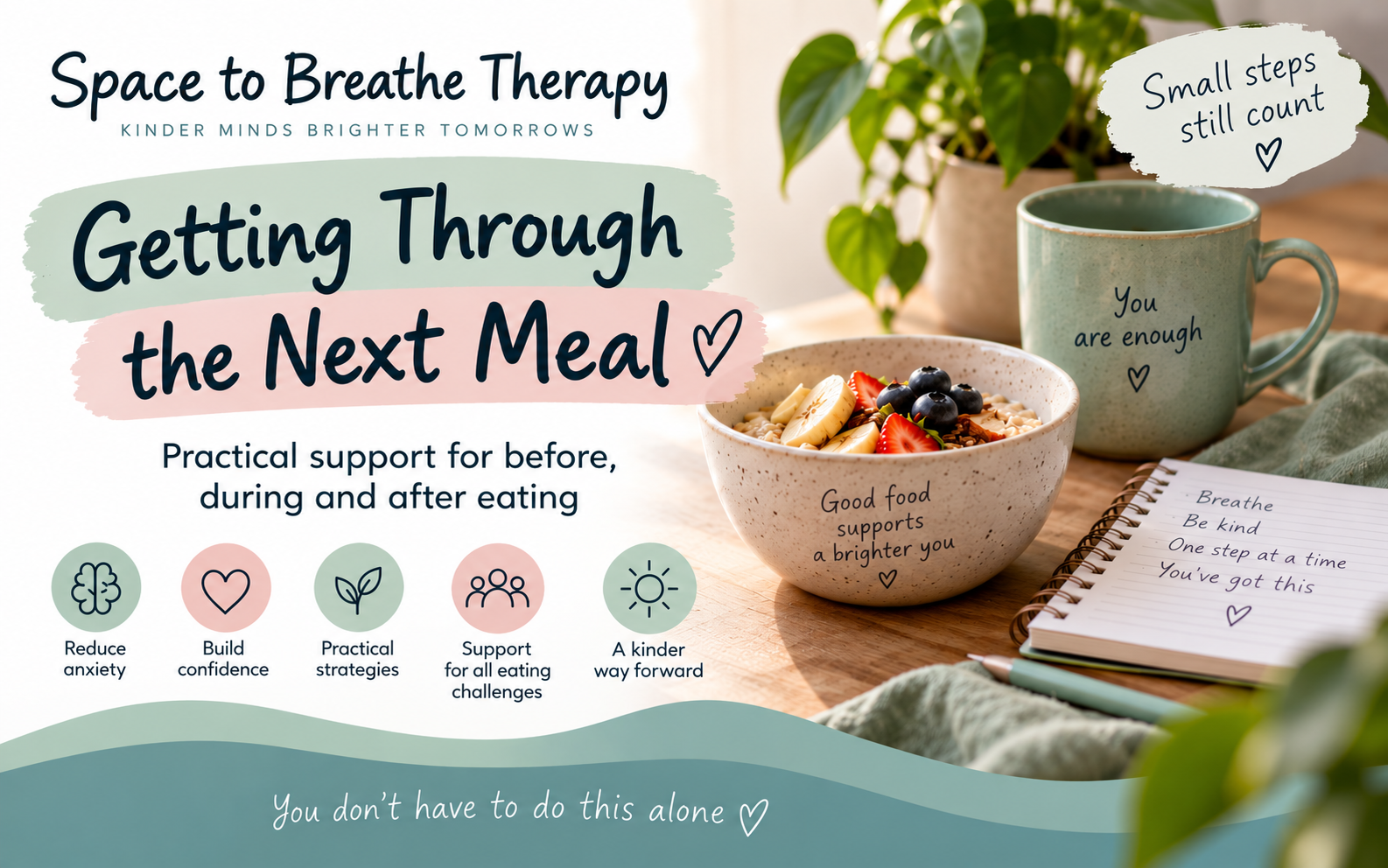
GETTING THROUGH THE NEXT MEAL
When you are living with an eating disorder, disordered eating or ARFID, sometimes thinking about recovery as a whole is simply too much. Even thinking about tomorrow's meals can feel overwhelming.
So this resource brings everything back to one thing: getting through the next meal.
A meal can carry far more than food. It can bring anxiety, sensory overload, nausea, fear of choking or vomiting, difficult memories, worries about your body, guilt, rules around food or the feeling that everybody is watching what you eat.
That is why telling somebody to “just eat” rarely reflects what they are actually experiencing.
Getting Through the Next Meal is a practical and compassionate guide designed to help make eating feel a little safer and more manageable.
INSIDE THIS RESOURCE
The guide takes you gently through the period before, during and after a meal.
It explores anticipatory anxiety and how preparing the environment can help. It considers noise, smells, lighting, textures, temperature, familiar foods, seating, company and distraction, because sometimes relatively small adjustments can make an enormous difference.
During the meal, the resource looks at what happens when the nervous system is overwhelmed and offers practical grounding and regulation ideas without turning eating into another performance or test.
There is also guidance for the person sitting beside someone who is struggling, including the difference between supporting and supervising. Comments about portions, bodies, calories, speed or how much food is left can increase distress even when they are intended to help. Calm company, ordinary conversation and asking what the person actually needs can feel very different.
AFTER EATING MATTERS TOO
For many people, completing the meal isn't the end of the difficult part.
Fullness, guilt, eating-disorder thoughts, body checking or urges to compensate can become particularly intense afterwards.
The guide therefore includes a practical 30–60 minute after-meal plan, helping you think beforehand about distraction, connection, comfort and support rather than trying to work everything out while distressed.
CREATE YOUR OWN MEAL SUPPORT PLAN
There is a downloadable Before–During–After Meal Plan inside the resource.
You can use it to identify what feels manageable today, where you would prefer to eat, sensory changes that might help, whether you want somebody with you, what you would like them to say — or not say — which grounding or distraction strategies help you, what you will do immediately after eating, and who you can contact when things become particularly difficult.
There is also space to notice what you learned from the experience without grading yourself on whether the meal was a “success” or “failure”.
SMALL STEPS STILL COUNT
You might need a familiar food. You might need the same bowl. You might need somebody beside you. You might need distraction. You might need quiet. You might need more time.
Those things do not make the support less meaningful.
This resource isn't about eating perfectly. It is about helping you find a kinder and safer way through something that can feel incredibly difficult.
You don't have to manage every future meal today. For now, we can concentrate on the next one.
Maggie
Space to Breathe Therapy
This resource provides educational and emotional support and does not replace individual medical, dietetic or eating-disorder treatment.