





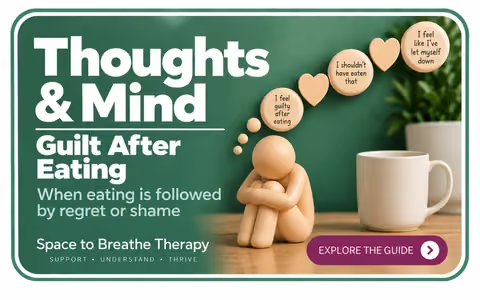
Guilt After Eating
Understanding food guilt, shame and the emotional impact of eating
Eating is a natural and essential part of life, yet for some people, finishing a meal or snack can bring overwhelming feelings of guilt, shame, anxiety or regret. Rather than feeling satisfied or comfortable, they may experience distress, question what they have eaten or feel compelled to compensate for it.
Guilt After Eating explores why these difficult emotions develop, how they can affect our relationship with food and why eating should never be something we feel we need to punish ourselves for.
This article examines the connection between food guilt, restrictive eating, body image, emotional wellbeing and eating disorders. It explains how messages about 'good' and 'bad' foods, diet culture, past experiences and rigid food rules can create feelings of wrongdoing around something our bodies naturally need.
Inside this article, you will explore:
- Understanding guilt after eating: Why feelings of guilt, regret or anxiety can arise following meals and snacks, even when no wrongdoing has occurred.
- The difference between guilt and shame: How feeling that you have done something wrong differs from believing something is wrong with you.
- Food rules and restriction: How strict expectations around eating can reinforce guilt, increase food-related anxiety and contribute to difficult patterns.
- The guilt and restriction cycle: Understanding how distress after eating can lead to attempts to compensate, potentially reinforcing the very feelings someone is trying to escape.
- Body image and self-worth: Exploring how appearance concerns, comparison and beliefs about weight or shape can influence emotional responses to eating.
- Eating disorders and emotional distress: Recognising how guilt after eating may occur alongside anorexia nervosa, bulimia nervosa, binge eating disorder and other eating difficulties.
- ARFID and neurodivergence: Understanding how sensory experiences, anxiety, pressure from others and difficulties around eating can create guilt for reasons unrelated to weight or appearance.
- Responding with compassion: Exploring ways to acknowledge difficult emotions without turning to punishment, further restriction or rigid rules.
- Supporting someone experiencing food guilt: Guidance for family members, partners, carers and professionals on responding without judgement or increasing pressure.
- Recognising when additional support is needed: Understanding when guilt, anxiety or compensatory behaviours may indicate a need for professional help.
Throughout the article, readers are encouraged to recognise that feeling guilty after eating does not mean they have done anything wrong. Emotions can be powerful and convincing, but they do not determine whether someone deserves nourishment, comfort or care.
The article also recognises that guilt after eating does not look the same for everyone. For some, it may be closely connected to body image or restrictive food rules. For others, particularly those experiencing ARFID, sensory sensitivities or neurodivergence, guilt may arise from struggling to eat, being unable to manage particular foods or feeling that they have disappointed someone.
Rather than offering another set of rules about eating, this resource encourages understanding, self-compassion and recognition of the emotional experiences that can make food feel difficult.
Who is this article for?
This article is suitable for individuals experiencing guilt or shame around eating, people recovering from eating disorders, those living with ARFID or other eating difficulties, and family members, carers and professionals wanting to better understand how to offer support.
The aim is to help readers understand that food does not need to be earned, eating does not require punishment, and difficult feelings deserve compassion rather than criticism.
Space to Breathe Therapy — Supporting a more compassionate relationship with food, emotions and wellbeing.




