





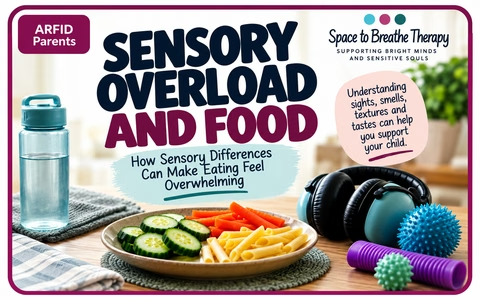
Sensory Overload
and Food
How sensory differences can make eating feel overwhelming — and how to help your child feel safer.
Space to Breathe Therapy
Supporting Bright Minds and Sensitive Souls
When food feels like too much
For some children, eating means managing a whole collection of sensations at once. The appearance, smell, temperature, flavour and texture of food can all feel intense — even before the first bite.
What adults may see
Turning away, refusing a meal, gagging, leaving the table, becoming upset or eating only very specific foods.
What the child may experience
Discomfort, nausea, unpredictable textures, strong smells, competing sounds, anxiety or an overwhelming need to escape.
Understanding ARFID
Avoidant/Restrictive Food Intake Disorder (ARFID) may involve sensory sensitivity, fear of consequences such as choking or vomiting, or low interest in food. These experiences can overlap. ARFID is not defined by a wish to change body shape or weight.
Children can feel hungry and still be unable to manage the food offered. Sensory distress is not simply a matter of choosing to be difficult.
Signs of sensory overload
- Covering ears, nose or eyes
- Gagging, retching or spitting food out
- Freezing, becoming silent or withdrawing
- Increasing restlessness, crying or irritability
- Needing to leave the room or eat elsewhere
- Becoming less able to eat as the meal continues
Repeated coughing or choking during eating, pain when swallowing or food sticking requires medical assessment rather than being assumed to be sensory.
Explore the sensory world
Choose a sensory area to explore what may be happening and discover adjustments that can make a difference.
Which senses appear most challenging?
Choose a response for each area. This is a reflection tool, not a diagnostic test.
Build your child's overload map
Overload can build gradually. A child may manage a food at home but find the same food impossible in a noisy school dining hall.
Environment
Noise, lighting, smells, temperature, seating and the number of people present.
Food demands
Unexpected ingredients, mixed textures, changes to brands or pressure to try something.
Body and emotions
Fatigue, illness, pain, reflux, nausea, worry and uncertain hunger signals.
Social expectations
Being watched, questions about eating, comparisons or expectations to finish.
Interactive mealtime load explorer
Move each slider from 0 (little difficulty) to 4 (very difficult). This helps visualise cumulative demands, not measure a medical condition.
Understanding safe foods
Safe foods provide reliability. A child's preferred food may need to be a particular brand, shape, temperature, packaging or preparation method.
Why small changes matter
A different pasta shape, thicker crisp, broken biscuit or new recipe can alter texture and predictability enough to make eating difficult.
What helps
Keep reliable foods available, give advance notice of changes and avoid hidden substitutions or unexpected ingredients.
Create a safe food profile
Supporting your child at mealtimes
Regulation and connection come before expectations. These ideas can help reduce unnecessary sensory demands.
Before
- Explain what food is available.
- Include reliable options.
- Prepare a comfortable space.
- Offer manageable choices.
During
- Use calm, neutral language.
- Reduce noise and smells.
- Allow breaks or movement.
- Avoid bargaining over bites.
After
- Reconnect without criticism.
- Avoid reviewing how much was eaten.
- Notice helpful adjustments.
- Allow time to recover.
Choose a mealtime situation
Helpful words to try
“Just try one bite.”
Try:“You don't have to prove anything. What would help right now?”
“You ate this yesterday.”
Try:“Something feels different today. Let's work out what changed.”
“Everyone else can eat it.”
Try:“Different people experience food differently.”
“Don't make a fuss.”
Try:“I can see this is too much. We can reduce the demands.”
Food exploration without pressure
Exploration does not need to begin with tasting. Some children may benefit from optional, playful or structured contact with foods, but this should never be forced or used to withhold preferred foods.
A food may be in the room without the child being expected to engage with it.
The child may choose to look at the colour or shape from a comfortable distance.
A spoon, fork or container may allow interaction without direct touch.
Touching, smelling or bringing food closer may be considered if the child wants to.
Any progression towards tasting or eating should be child-centred and, where clinically needed, guided by an appropriately trained professional.
Plan one low-pressure change
Parent and carer reflection
Supporting a child with eating difficulties can be exhausting. Worry about health, growth, family meals and social situations can make it hard to remain calm.
These questions are intended to encourage understanding, not judge your parenting.
Try the sensory perspective exercise
Imagine being offered a food with a smell you find unpleasant, a texture you dislike or an unpredictable sensation. Now imagine someone watching and repeatedly asking you to eat it.
What might help you feel safer? Would pressure make the sensation easier or harder?
Notice your own reactions
Adults have food preferences, sensory dislikes and comfort routines too. Recognising these can help build empathy without assuming your experience is identical to your child's.
My child's sensory support plan
Use this space to bring together what you have learned. You can print the plan and, where appropriate, discuss it with your child, school or healthcare team.
Entries are saved on this device when browser storage is available.
When specialist support is important
Seek professional assessment when food restriction affects growth, weight, nutrition, hydration, physical health, development or everyday functioning, or when fear and distress significantly interfere with eating.
A GP, paediatrician, registered dietitian, speech and language therapist or ARFID-informed mental health professional may be involved, depending on the child's needs.
Urgent concerns: Seek urgent medical advice for dehydration, fainting, severe weakness, repeated choking or an inability to keep fluids down. In the UK, NHS 111 can advise on urgent care; call 999 for a life-threatening emergency.
Further information
Beat Eating Disorders provides information and support about eating disorders, including ARFID.
NHS provides health information and routes to assessment.




