





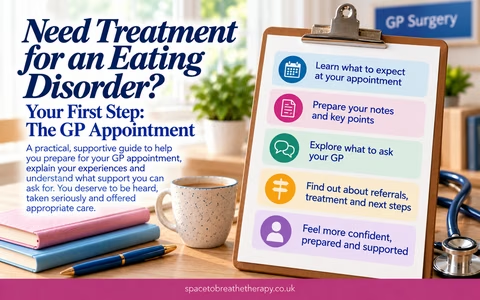
Need Treatment for an Eating Disorder?
Your First Step: The GP Appointment
Asking for help can feel difficult. This interactive guide will help you prepare for your GP appointment, explain your experiences and understand what support you can ask for.
Step 1 of 7
Step 1 — Getting Started
You do not need to have a diagnosis, be a particular weight or wait until things become worse before asking for help.
Contact your GP surgery and explain that you are concerned about a possible eating disorder and would like an appointment to discuss assessment and treatment.
You could say:
You can request a longer appointment if available, ask to see a particular clinician, or bring someone you trust.
If speaking is difficult, you can show your GP the summary you create in this guide.
Step 2 — Understanding My Experiences
Eating disorders can affect people of all ages, genders and body sizes. You do not need to know which diagnosis fits your experiences.
You can use these spaces to explain what has been happening, without having to share anything you are not ready to discuss.
Step 3 — My Physical and Emotional Health
Eating disorders can affect physical and emotional health. Your GP may ask about symptoms, eating patterns, medical history, medication and your general wellbeing.
Tick anything you would like to discuss. These are prompts, not a diagnostic checklist.
Your GP may check your pulse, blood pressure, temperature, weight or other physical measurements, and may arrange blood tests or an ECG if indicated. They should explain why these checks are needed.
You can ask not to be told your weight or to have measurements handled sensitively, while still receiving necessary medical monitoring.
Step 4 — How I Would Like to Communicate
You can ask for reasonable adjustments to make your appointment more accessible, including adjustments relating to autism, ADHD, sensory needs, communication differences or anxiety.
Step 5 — Questions I Can Ask My GP
Select questions you would like to take into your appointment.
Your GP can consider referral to a specialist eating disorder service. The referral pathway depends on your age, needs and local NHS services.
NICE guidance recommends that suspected eating disorders are referred promptly for specialist assessment. BMI alone should not determine whether someone is offered treatment.
Step 6 — My GP Appointment Summary
Your answers are brought together here so you can read them, download them or show them to your GP.
My prepared summary
Your notes remain on your device unless you choose to share them. Downloaded files are not password-protected.
Step 7 — What Happens After My GP Appointment?
You may be referred to an eating disorder service, offered further physical health checks or given a follow-up appointment.
Ask which service will receive your referral, how you will be contacted and what support is available while you wait.
You can ask your GP to explain the decision, request a review or seek a second opinion. You can also ask about other appropriate support and follow-up.
My next steps
Beat Eating Disorders provides information and support in the UK.
NHS eating disorder information explains symptoms, assessment and treatment.
If you need urgent medical advice in England, contact NHS 111. Call 999 for an emergency.
Your answers are automatically saved locally in this browser where storage is available. Clearing browser data or using another device may remove access to them. This guide is educational and does not replace medical assessment or treatment.
spacetobreathetherapy.co.uk




