





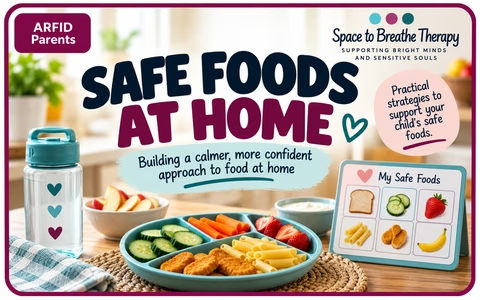
Safe Foods
at Home
Building a calmer, more confident approach to food at home
Space to Breathe Therapy
Supporting Bright Minds and Sensitive Souls
Why safe foods matter
For a child living with Avoidant/Restrictive Food Intake Disorder (ARFID), safe foods can provide predictability, comfort and a manageable way to meet some of their nutritional needs.
A food may feel safe because its taste, smell, texture, appearance, temperature, packaging or preparation is consistent. Even a small change can make a previously reliable food difficult to eat.
What parents may notice
Requests for particular brands, identical preparation, separate foods, familiar plates or foods that must look exactly right.
What children may experience
Uncertainty, sensory discomfort, nausea, fear of unexpected textures or difficulty trusting a food that has changed.
Three important principles
What makes a food feel safe?
Every child has a different pattern of food preferences. Explore the areas below to understand why a particular food may feel manageable.
Look beyond the food name
Same food, new brand
The flavour, thickness or crunch may be different.
Same brand, new recipe
A reformulation may change the child's experience.
Same food, different plate
Appearance, portion size or foods touching may affect comfort.
My Safe Foods Library
Create a personal record of foods your child can currently manage. Include exact details that may help parents, carers, relatives and professionals understand what makes each food reliable.
Add a safe food
Saved foods
Understanding sensory preferences
Food comfort can be influenced by several sensory characteristics at once. Select each area to explore possible patterns.
Build your child's sensory profile
Planning safe food availability
Knowing which foods are available can reduce uncertainty. A practical home plan can also help adults avoid last-minute shortages of important foods.
Safe food stock checklist
Weekly planning notes
This is a flexible planning space, not a requirement to eat particular foods or finish portions. Where nutritional support is needed, follow the child's individual care plan.
When a safe food changes
A change in recipe, packaging, shape, smell or preparation can make a familiar food feel unpredictable. The child's reaction may be intense even when the difference appears small to an adult.
Explore common situations
A practical response
Creating a supportive food environment
The goal is to reduce unnecessary stress while helping the child access the food and support they need.
Predictable routines
Give advance information about meals, changes and food availability where helpful.
Calm communication
Use respectful, neutral language without threats, bargaining or comparisons.
Sensory adjustments
Consider lighting, noise, cooking smells, seating, utensils and separate foods.
Shared understanding
Help relatives and other carers follow the same agreed approach.
What could you say instead?
Parent reflection
Our Safe Foods at Home Plan
Use this plan to bring together your child's needs, the strategies that help and the arrangements you want other carers to understand.
Entries are saved on this device where browser storage is available.
When additional help is needed
Seek assessment if food restriction is affecting growth, weight, nutritional adequacy, hydration, physical health or everyday functioning. Depending on the child's needs, support may involve a GP, paediatrician, registered dietitian, eating-disorder service or other appropriately trained professional.
Seek urgent medical advice for dehydration, fainting, severe weakness, rapidly worsening intake or difficulty swallowing. In the UK, NHS 111 can advise on urgent concerns; call 999 for a life-threatening emergency.




